Showing posts with label action. Show all posts

Tuesday, March 9, 2010

A shameless Crunchyroll.com plug and 2 Anime Reviews: Bakemonogateri and Shinguri

Yo yo yo anidorks what’s up? Been a long time since I rapped at ya. I 've been slacking this blog for a while but that doesn’t mean I’ve been slacking on the manga and anime.


A month or two ago, I found myself getting increasing frustrated with fansubbed episodes. Not that the subbing was bad or that I, god forbid, felt guilty about it; it was just that my dang 5 year old slow-ass Dell hunk-of-crap PC was having trouble with VLC Player and Windows Home Cinema. Episodes were either freezing (VLC) or the audio was out of sync with the sub (Windows) and I was starting to get a little batty. So, I ended up going on Crunchyroll.com cause I had heard a lot about it....and lo and behold, I was pretty impressed.

Now, I do think most of the stuff on Crunchyroll is a little more middle of the road than I like (Shugo Chara? Eyeshield 21? Zzzzzzz); still, a website with free streaming episodes that has both brand new episodes of Naruto: Shippuden and Gintama along with minimally invasive advertising is a great step forward for watching anime. It’s quick, it’s easy, it’s affordable, and you’re not stuck in that moral limbo of fan-subs. Also, if you’re one of those total J-culture freaks, there are loads of Korean dramas to view too.

I ended up watching the first 40 or so episodes of Naruto: Shippuden over the course of a month…and naturally burned myself out on N:S (Christ, how long is it gonna take to “rescue” that sullen jackass Sasuke?). That having been said, once I’m done with Bakemonogatari (see below), I’m probably gonna get back on Crunchyroll to check out Linebarrels of Iron and Code Geauss, both of which I’ve heard good things about.

*****
Anyway, once I got sick of Naruto and his orange jumpsuit, I ended up back to fansubs – the simple remedy of downloading the latest Window Home Cinema put everything right. Thus, Bakemonogatari….


Describing Bakemonogatari is a struggle because it’s so unique but so familiar at the same time; it’s a weird and idiosyncratic cross between a ghost-hunt series (good natured ex-vampire Araragi keeps encountering strange, creepy spirits..), a harem series (…spirits that seem to be affecting the lives of a series of his comely female schoolmates and friends), and an artistic exercise that’s both eerie and full of otaku in-jokes.

With the exception of Mononoke, I’m at a loss to think of a series that’s as visually engaging; the inventive use of color, shading, perspective, camera angles, and editing are unlike any current series that I've seen. It turns a number of anime clichés on their head; and despite it being full of creepy occult allusions, the characters treat the supernatural in an insanely casual way – a wandering ghost or a curse is treated in the same annoyed and relaxed way that a case of dandruff would be.

The usual character clichés one finds in your typical anime are also warped into something unique. The character of Senjougahara is a perfect example – despite appearing to be the archetypal tsundere in the first few episodes, she warms to Araragi while still retaining her cool, stately demeanor the whole series. She'll aggressively flirt with Araragi at times....but it's clear she’s in control and a force to be reckoned with, almost like a film noir femme fatale. In a way, the banter between her and Araragi almost reminded me of the pseudo-noir film Brick (i.e. darkly humorous dialog batted around by teens talking like cynical and stylish adults).

Like Sayonara Zetsubou Sensei, Bakemonogatari is very, very Japanese – at times, the dialog is so casual and the action and plot so nuanced that some viewers are bound be turned off; I love dialog-heavy series so I was perfectly fine with it, but do be aware there’s very little “action” in the traditional sense. Also, I found elements of the “snail” plot (involving a flirtatious grade school girl) to be in bad taste; I dig harem anime as much as the next dork but I’m getting increasingly tired of these “young girl, get out of my life” characters – and it’s particularly glaring when Bakemonogatari has three excellent and strong female characters (the afore mentioned Senjougahara, the primly charming class president Hanekawa, and the spazzy but likeable Kanbara).

That being said, Bakemonogatari is a unique and boundary-pushing series that deserves a look. Hopefully, some clever company and license it here in the US; it’s got a huge fan base in Japan, so that should work in its favor.


Lastly, I want to mention a great blood n’ guts chanbara series Shiguri (aka Death Frenzy). On the orders of deviant Tokogawa noble, two crippled swordsmen square off for a death match. The action suddenly flashes back to their mutual past as brothers in arms/rivals at the rough and tumble Kogan dojo – both Ikuro and Fujiki are skillful enough to take over the dojo’s leadership, but it’s Ikuro’s charm and extraordinary talent that win him the favor of the dojo’s powerful yet insane master, Iwamoto. The haughty Ikuro begins to lord this over the forthright Fujiki, but when Iwamoto finds out that Ikuro has been dallying with his mistress Iku, he blinds Ikuro and kicks him out of the dojo. Before long, the various students of the dojo begin getting killed by a mysterious swordsman….one that can only be Ikuro, bent on revenge.

Very bloody, very explicit, and very, very dark (both visually and thematically), Shiguri is still a blast to watch – I gladly put up with the spurting blood and entrails despite my low gore tolerance because the story was enthralling and well-paced, and the animation was top-notch and realistic (a bit too realistic at times!). A great choice for fans of Lady Snowblood /Vagabond , or folks (OK, dudes) who like their samurai action on the hardcore, non-Rouroni Kenshin side, this is an ideal DVD to put on when your macho non-otaku friends start claiming that anime is for little girls. Kudos to FUNamation for licensing this in the USA.

Sunday, August 2, 2009

ANIME REVIEW: Parallel Dual


What up anidorks? Once again, personal and work issues have conspired to keep me paying closer attention to my danged email than to the Groundhog Day parody that’s been passing for the Melancholy of Haruhi Suzumiya, har har. Still, I have found time to catch a half-baked but not half-bad 90’s mech series: Parallel Dual.

Young Kazuki is deeply troubled by the visions of mech warfare that periodically flash in front of his eyes, a habit that makes him the subject of ridicule in his high school. But when Mitsuki - the prettiest girl in school - invites him home, he finds out his visions aren’t as weird as he though - Mitsuki’s eccentric scientist father Sanada is convinced Kazuki is somehow seeing into an alternate reality.

Naturally, the only solution is to send him there to see if it’s true...and Kazuki, the unwilling test subject, now finds himself in an alternate reality where Sanada commands a squadron of mechs, Mitsuki is a mech pilot, and the mech warfare he’s always feared is an actuality, as Sanada, Mitsuki, and their mechs are the last line of defense against the evil Rara Army's plans to take over Japan. Naturally, Kazuki is drawn into the conflict, and finds himself commanding a mech against a series of increasingly dangerous mech foes.

Pretty rote plot, I know…but the appeal of Parallel Dual is less about it’s pedestrian plot and more for the fact it’s note-by-note parody/satire/rip-off of Neon Genesis Evangelion:

• Crybaby boy pilot? Check.
• Pony-tailed tsundere pilot? Check.
• Spacey girl pilot? Check.
• Doting yet sexy commander/teacher/mother figure? Check.
• Eccentric and bespectacled scientist commander? Check.
• Lithe, stylized mechs fighting monstrous foes? Check.
• Heavy Freudian and biblical allegories? Um….

I have to say that I actually started to enjoy PD’s ramshackle tribute to NGE after a while; hell, there are far worse sources to steal from than NGE. Sure, the plot is pedestrian and predictable, but I found that to be almost reassuring; sometimes the formula is a formula for a reason. Artwise, it’s a mish-mash of styles: NGE-style mechs with characters that look like extras from Tenchi Muyo; likewise, I have to give the creators credit for stealing from the best.

All in all, Parallel Dual hardly wins on style or originality… but once you get used to the lightweight parody that it is, I think you’ll agree that the series actually isn’t half bad (although I'm sure hardcore Neon Genesis fans will be horrified by the blasphemy). There are far better series out there, but Parallel Dual is a fine diversion. I’ll give this one a solid C+.

Wednesday, March 11, 2009

Manga/Anime Review - Princess Resurrection


What up anidorks? I’ve decided to spare you from the usual comedy series and instead take a look at supernatural action series Princess Resurrection.


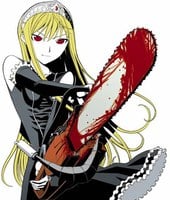
In thanks for his attempt to save her from a fatal accident, Hime – daughter of the King of Monsters – has granted middle schooler Hiro the gift of eternal life, but on two conditions: First, Hiro must partake of Hime’s blood every few days lest he dies; and secondly, Hiro must remain her servant/bodyguard for eternity as payment. It’s apparent that Hime needs all the help she can get, as her numerous brothers and sisters are intent on killing her and each other to achieve the royal throne. Hime's cohorts - half-breed werewolf Liza, opportunistic vampire Reiki, and Hime’s robot servant Flandre - all have the power to fight of the rival siblings and vengeful monsters out for Hime’s blood, but what can young Hiro do to help protect the life of his new master?

Supernatural-based anime and manga has seen a renaissance as of late, and PR is a solid offering in this genre. Series creator Yasunori Mitsunaga deviates from the popular “vengeful spirits” theme common in contemporary anime and manga*, and instead draws on the “classic horror” of 1950’s drive-ins (ala vampires, werewolves, zombies, and creatures from the Black Lagoon…can the Blob be far behind?) to power this series. Although I do enjoy the more subtle and elegant vibe of traditional Japanese horror, the blood-and-guts, monster-on-monster action of PR is definitely appealing for those of us who grew up on Boris Karloff and not Lufcadio Hearn. Hiro’s persistent need for Hime’s blood adds a nice bit of nasty (and a subtle erotic undertone) to this relatively straight-forward and action based shonen manga series.

That having been said, those of you who are able to view the anime series via ADV or the Anime Network will notice how the series has been “cleaned up”, for lack of a better word – rather than sup on Hime’s blood, Hiro instead gets the gift of Hime’s “Life Flame” (yeesh). It’s a shame that this integral plot element was modified in such a way, but that’s show biz I guess. Along with the overall lower level of gore, I find that the anime also removes a fair amount of gothic creepiness that Mitsunaga was able to impart via his artwork.

Still, the anime is a pleasant enough diversion (particularly after dark!) and the manga series deserves a read from horror and action-lovers alike.

*xxxHolic and Mushi-shi, for example.

Thursday, July 17, 2008

Manga Review – Pumpkin Scissors Vo1 1 and 2 by Iwanaga Ryotaro


Although the terrible war between the Empire and the Republic of Frost has ended, the war’s horrors remain – destruction, disease, hunger, crime, and corruption. In an attempt to try and remedy some of the situation, the Imperial Army has created State Section III (aka “Pumpkin Scissors” for its ability to “snip” through the thick “pumpkin shell” of corruption and desperation) to combat banditry and aid in the relief and reconstruction of the Empire. But with little respect and even less funding, Pumpkin Scissors - and it’s proud but strident field commander 2nd Lt Alice L. Malvin – have their hands full combating the crime and deprivation that plagues the Imperial countryside. When the platoon receives assistance from a kindly but mysterious ex-solider named Randel Orland, they’re shocked to find out that the “gentle giant” they befriended is actually a former member of a secret tank-killing brigade - and a deadly and unstoppable killing machine in his own right. With Randel at their side, Pumpkin Scissors must confront angry civilians, bent politicians, and thuggish ex-soldiers, and a secret and bloodthirsty military organization known only as the “Invisible 9” - who may hold the key to Randel’s mysterious past….

Similar to the classic Patlabor series in it’s “bad division” formula (i.e. a misunderstood and unpopular brigade of talented eccentrics use their skill and bravery to slowly win the respect and admiration of friend and foe alike), PS wins points for it’s setting and characterizations; Iwanaga creatively choose to set the series in a fictional version of 1930’s Europe (albeit with slight Japanese social overtones), with the resulting technology of the day – without wireless radios, jets, or submachine guns, the action is a gritty mix of tanks, rifles, and sheer guts. Iwanaga also uses humor to good degree; with the exception of Randel, the personal of Pumpkin Scissors are obviously pencil-pushers unsuited to the stress of actual combat. The art is a little rough at first but soon improves to a style that’s both cartoonish and sharp, and the action scenes are exciting and well-rendered.

All in all, Pumpkin Scissors is a well-done and straightforward action series with elements of humor and political intrigue; I look forward to subsequent volumes.

Tuesday, April 15, 2008

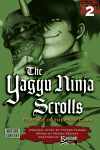
Manga Review - The Yagyu Ninja Scrolls: Revenge of the Hori Clan, Vol 2. Futaro Yamada, story/Masaki Segawa, art


When the men of the Hori clan rebel against the villainous Lord Akinairi, he orders them to be mercilessly slaughtered by a group of blood-thirsty ninjas known as “The Aizu Seven Spears”. Enraged by the callous murder of their brothers, fathers, and husbands, the 7 surviving women of the clan turn to a vagabond swordsman named Yagyu Jubei for training in the ways of war and leadership in their quest for revenge. Jubei is no starry-eyed optimist, and warns the women that most of them can expect either torture or death at the hands of Akinari and the Seven Spears if they choose to fight back. Undaunted, all 7 women agree to train and fight the Seven Spears – or die trying!

This manga’s basic plot – a cocky, wandering swordsman fighting off 7 weird opponents – is essentially the same plot as the classic Ninja Scroll movie and the Samurai Showdown video game. Interestingly, all three of these works are drawn from the writings of Futaro Yamada, who effectively laid the groundwork for the modern depiction of the ninja in his 1960’s series of Ninpocho novels. Main protagonist Yagyu Jubei is a popular Japanese folk hero, and like fellow wandering swordsman Miyamoto Musashi, his legendary exploits have been depicted in dozens of books, manga, and films

There are slightly fantastic elements to this series, but very little of the outlandish video-game like costumes or characters you often see in “ninja” series (or even in Masaki’s previous ninja-centric Basilisk); this is a much more “realistic”* depiction of the art of ninjitsu than the average Naruto reader may be used to. The watercolor-influenced shading and tinting gives a luminous feeling to what is basically a very dark and foreboding art style. Masaki succeeds in making the Seven Spears look truly villainous, and Jubei and the Hori woman aren’t spared either. As handsome as he is, Jubei spends most of the volume looking like smirking lecher, a quality that his constant 5 o’clock shadow and missing eye do nothing to help. The Hori women are both eerily beautiful yet terrifying when angry; when their doe eyes narrow in fury, they truly resemble the female demon masks that they wear to hide their identities.

With the exception of the characters of Sakura and Ofue, most of the seven Hori women are somewhat similar in their appearance and personality - but I hope that the following volumes will draw out the character of each one of them. I also enjoyed the depiction of the Hori woman as brave and willing participants in their fate, rather than anonymous objects; even in the course of this one volume, one can see them gain in strength and ability.

In this volume, a devil-masked Jubei confronts the sickle-and-chain wielding Tessi of the Seven Spears, and barely escapes with his life. Tessi reports back to the Seven Spears, and they debate the origin of their new and unknown opponent; meanwhile, the Hori women begin their training with Jubei. Rough and painful as the training is, the women remain committed. When it comes to light that fiendish Tessi is attempting to sell 6 young women into sex slavery, the Hori women must use their new-found skills – and Jubei’s tactics of subterfuge – to kill Tessi. Are they ready?

This series has a well-deserved Mature Rating – so much like Welcome to the NHK, don’t come crying to me if your mom gets pissed when she finds this in your bookbag, kids.

* Even then, this is a far cry from the real-life exploits of the historical ninja