Showing posts with label Anime. Show all posts

Tuesday, March 9, 2010

A shameless Crunchyroll.com plug and 2 Anime Reviews: Bakemonogateri and Shinguri

Yo yo yo anidorks what’s up? Been a long time since I rapped at ya. I 've been slacking this blog for a while but that doesn’t mean I’ve been slacking on the manga and anime.


A month or two ago, I found myself getting increasing frustrated with fansubbed episodes. Not that the subbing was bad or that I, god forbid, felt guilty about it; it was just that my dang 5 year old slow-ass Dell hunk-of-crap PC was having trouble with VLC Player and Windows Home Cinema. Episodes were either freezing (VLC) or the audio was out of sync with the sub (Windows) and I was starting to get a little batty. So, I ended up going on Crunchyroll.com cause I had heard a lot about it....and lo and behold, I was pretty impressed.

Now, I do think most of the stuff on Crunchyroll is a little more middle of the road than I like (Shugo Chara? Eyeshield 21? Zzzzzzz); still, a website with free streaming episodes that has both brand new episodes of Naruto: Shippuden and Gintama along with minimally invasive advertising is a great step forward for watching anime. It’s quick, it’s easy, it’s affordable, and you’re not stuck in that moral limbo of fan-subs. Also, if you’re one of those total J-culture freaks, there are loads of Korean dramas to view too.

I ended up watching the first 40 or so episodes of Naruto: Shippuden over the course of a month…and naturally burned myself out on N:S (Christ, how long is it gonna take to “rescue” that sullen jackass Sasuke?). That having been said, once I’m done with Bakemonogatari (see below), I’m probably gonna get back on Crunchyroll to check out Linebarrels of Iron and Code Geauss, both of which I’ve heard good things about.

*****
Anyway, once I got sick of Naruto and his orange jumpsuit, I ended up back to fansubs – the simple remedy of downloading the latest Window Home Cinema put everything right. Thus, Bakemonogatari….


Describing Bakemonogatari is a struggle because it’s so unique but so familiar at the same time; it’s a weird and idiosyncratic cross between a ghost-hunt series (good natured ex-vampire Araragi keeps encountering strange, creepy spirits..), a harem series (…spirits that seem to be affecting the lives of a series of his comely female schoolmates and friends), and an artistic exercise that’s both eerie and full of otaku in-jokes.

With the exception of Mononoke, I’m at a loss to think of a series that’s as visually engaging; the inventive use of color, shading, perspective, camera angles, and editing are unlike any current series that I've seen. It turns a number of anime clichés on their head; and despite it being full of creepy occult allusions, the characters treat the supernatural in an insanely casual way – a wandering ghost or a curse is treated in the same annoyed and relaxed way that a case of dandruff would be.

The usual character clichés one finds in your typical anime are also warped into something unique. The character of Senjougahara is a perfect example – despite appearing to be the archetypal tsundere in the first few episodes, she warms to Araragi while still retaining her cool, stately demeanor the whole series. She'll aggressively flirt with Araragi at times....but it's clear she’s in control and a force to be reckoned with, almost like a film noir femme fatale. In a way, the banter between her and Araragi almost reminded me of the pseudo-noir film Brick (i.e. darkly humorous dialog batted around by teens talking like cynical and stylish adults).

Like Sayonara Zetsubou Sensei, Bakemonogatari is very, very Japanese – at times, the dialog is so casual and the action and plot so nuanced that some viewers are bound be turned off; I love dialog-heavy series so I was perfectly fine with it, but do be aware there’s very little “action” in the traditional sense. Also, I found elements of the “snail” plot (involving a flirtatious grade school girl) to be in bad taste; I dig harem anime as much as the next dork but I’m getting increasingly tired of these “young girl, get out of my life” characters – and it’s particularly glaring when Bakemonogatari has three excellent and strong female characters (the afore mentioned Senjougahara, the primly charming class president Hanekawa, and the spazzy but likeable Kanbara).

That being said, Bakemonogatari is a unique and boundary-pushing series that deserves a look. Hopefully, some clever company and license it here in the US; it’s got a huge fan base in Japan, so that should work in its favor.


Lastly, I want to mention a great blood n’ guts chanbara series Shiguri (aka Death Frenzy). On the orders of deviant Tokogawa noble, two crippled swordsmen square off for a death match. The action suddenly flashes back to their mutual past as brothers in arms/rivals at the rough and tumble Kogan dojo – both Ikuro and Fujiki are skillful enough to take over the dojo’s leadership, but it’s Ikuro’s charm and extraordinary talent that win him the favor of the dojo’s powerful yet insane master, Iwamoto. The haughty Ikuro begins to lord this over the forthright Fujiki, but when Iwamoto finds out that Ikuro has been dallying with his mistress Iku, he blinds Ikuro and kicks him out of the dojo. Before long, the various students of the dojo begin getting killed by a mysterious swordsman….one that can only be Ikuro, bent on revenge.

Very bloody, very explicit, and very, very dark (both visually and thematically), Shiguri is still a blast to watch – I gladly put up with the spurting blood and entrails despite my low gore tolerance because the story was enthralling and well-paced, and the animation was top-notch and realistic (a bit too realistic at times!). A great choice for fans of Lady Snowblood /Vagabond , or folks (OK, dudes) who like their samurai action on the hardcore, non-Rouroni Kenshin side, this is an ideal DVD to put on when your macho non-otaku friends start claiming that anime is for little girls. Kudos to FUNamation for licensing this in the USA.

Wednesday, November 25, 2009

Anime Review: Ghost Hunt/Ghost Hound

What up anidorks? It’s a two-for-one day here at OPL: a double barreled blast of Japanese horror, anime-style. First, Ghost Hunt…..


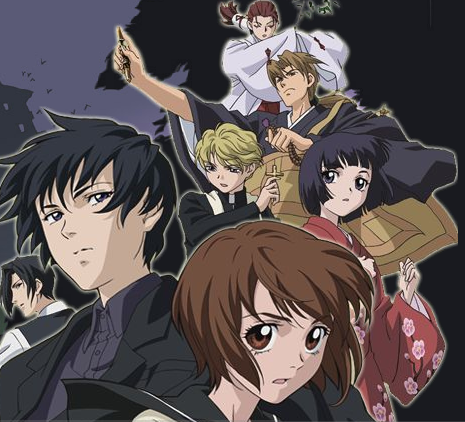
A costly accident forces high school freshman Mai into taking a part-time job…but rather than flip burgers, Mai ends up at working at SPR, a paranormal investigation agency run by Naru, a mysterious young man not much older than Mai. Naturally, the spunky, outspoken Mai and the cold and narcissistic Naru butt heads, but their animosity is tempered by the weird and eerie hauntings they’re hired to investigate.

Ghost Hunt takes a unique turn for Japanese horror, being less interested on atmosphere and more on the actual science and technology of paranormal investigation; it’s closer to a police procedural or detective case than a ghost story. Aside from the storyline involving (spoiler alert!) Mai’s latent psychic abilities, its light on over-arching plot and more focused on episodic investigations, and at times it feels a bit flimsy and formulaic; it may just be the case that the episodic format of manga doesn’t always translate well to the anime medium. Character development is a bit insubstantial as well – Mai and Naru are sorta cardboard, and the supporting cast is a bit cliché (wholesome young catholic priest, sassy Shinto priestess, goofy Buddhist monk, etc). Nevertheless, Ghost Hunt takes the standard ghost story format and injects a welcome scientific/real world element. Dubbing, subtitling, and packaging are up to the usual fine FUNamation standard. Nothing earth-shattering here, but it’s a pleasing series for younger otaku and a pleasant enough diversion for older ones.

Ghost Hound, on the other hand, is a keeper. Haunted by strange, nonsensical memories of his childhood kidnapping and older sister’s death, shy middle schooler Tarou has begun to realize his strange dreams are not dreams at all – they’re out of body experiences. When he finds out two of his schoolmates (cocky rich kid Masayuki and sullen delinquent Makoto) both share similar traumatic pasts and the same out of body experiences, the three begin to explore the strange dimensional rift between the world of the living and world of the dead. It soon becomes clear to the three boys that strange forces are at play in their small town, and that a mysterious old hospital, a clandestine bio-tech corporation, the relationship between Makoto’s parents, and the daughter of a local Shinto priest may all hold the key to Tarou’s bizarre memories - and the explanation for his beloved sister’s death. It’s a puzzle the boys must solve quickly, as the gate to the world of the dead is beginning to open….


Series creator Masamune Shirow is better known for his 1990’s “cyberpunk” epics (i.e. Ghost in the Shell, Appleseed), so I was somewhat surprised to hear that he had come up with what appeared to be a straight horror/paranormal series. Although it’s a deviation from his usual sci-fi fare, it’s still heavy on his usual psychological theorizing: just as Ghost in the Shell examined what conscious and identity really mean, Ghost Hound is a subtle and engrossing look at the thin line between the mysteries of the human mind and the paranormal. Otaku who enjoy “heavier” anime (ala Paranoia Agent, Mushi-shi) will particularly enjoy this atmospheric, eerie, and complex (but never convoluted) series.

Thursday, October 29, 2009

Robotech/Yotsuba Vol. 6/Hetalia - Axis Powers

What’s up anidorks? Yes, once again I’ve been sadly remiss in updating you on the latest and greatest in tsundere trivia, harem comedy reviews, and hikikomori references. Sadly, work and personal issues have conspired to eat my frickin’ brain and thus prevent me from usual my usual 60+ hours of anime and manga viewing per week. Why, a family situation even prevented me from attending the New York Anime Fest, thus depriving me of my two greatest joys: inexpensive remaindered manga and fatties doing cosplay. Har har.

Joking aside, I’ve honestly had a lot going on, and when that happens, the first casualty is inevitably this blog. Things have finally slowed down a bit, so I found time to cram in a few simple joys: Harmony Gold’s iconic Robotech, Yen Press’s Yotsuba vol.6, and the confusing yet appealing Hetalia – Axis Powers. So I’m going to do an extra long entry today to make up for my lack of updates since, oh, August.

***

I’m not going to torture you with the plot outline of Robotech, as I’m sure any anime dork worth his figurines knows it already: Mysterious spaceship falls to earth, aliens attack, and your usual-reluctant-but-talented-spiky-haired-guy becomes ace fighter/mech pilot. As I’ve mentioned before on this blog, Robotech was my “starter” anime series - so to purchase the DVD set and sit down to watch it was a highly nostalgic experience; it almost made me wish I could go back to being a chubby ten-year old with a mullet and no friends for the duration of the viewing in order to make even more authentic (actually, it didn’t).

I’m happy to say, in many ways, Robotech still holds up: the storyline, albeit clichéd, is still tightly paced and filler-free, the interpersonal relationships are realistic, the dialog and voice acting is decent, and the numerous action scenes do well to drive the plot…..but sweet baby Jesus, the animation itself is skin-crawlingly HORRIBLE. Faces are misshapen, uniforms and vehicles change colors from scene to scene, and overall the art is sloppy, rushed, and half-assed. If you’re used to the crisp, vibrant style of modern anime, it’s going to be a difficult transition - and the usual bonuses of hand-drawn anime (warm, deep color and expressionistic form) are hard to notice.

Still, if you can forgive its lack of visual perfection, Robotech is easily and deservingly a classic; it’s a shame that Macross (the anime from which Robotech was adapted) was never resolved. And, without sounding like a scold, it’s nice to watch a series that has such a low moe/fanservice element.
***

Like most living and breathing otaku, I’ve been anxiously awaiting Yotsuba 6 from Yen Press. As you may know, ADV (publisher of volumes 1 – 5) has pretty much tanked so it was looking like this popular series was a lost cause in print until up-and-coming publisher Yen Press took it over. Yen does a fine job with translation; although I don’t like they way Yen makes Yotsuba refer to herself in the third person, it’s a minor factor (and probably more faithful to Japanese grammar). So what is everyone’s favorite green-haired 5 year old up to these days, dare you ask? Yotsuba gets a bike, drinks milk, and then gets on her bike to bring milk to Fuka at her high school. Yes, it doesn’t seem like much on paper but Azuma has the rare genius for taking mundane situations and evaluating them to high comedy. Highly recommended.
***

One of the joys of anime is the fact that it’s willing to take chances, and Hetalia – Axis Powers is one hell of a screwball. A weird comedy/history mutant, it takes all the countries involved in WWII – Japan, England, Germany, the USA, etc – and personifying them in order to play out the epic conflict and other instances in world history as zany slapstick comedy: Italy begs Germany to be his friend, Italy and Germany try to befriend the standoffish Japan, England and America argue about how to help France after he gets beaten up by Germany, and so forth. It’s pretty funny and very politically incorrect (Italy is depicted as a pasta-scarfing wimp, Germany as an uptight jerk, Japan as a stuffy hermit, America as an energetic but deluded know-it-all, etc.) but man, I don’t really know how the animators are gonna spin the Holocaust, the Siege of Leningrad, the Rape of Nanking, Hiroshima, etc, as something to chuckle at.
The adventurous might want to give it a try because it does have some genuinely funny parts – the humor poking fun at the individual countries is pretty dead on – but do be warned it plays it pretty fast and loose with history.

Monday, August 17, 2009

Endless Eight ends/Cyborg 009 and Peacemaker Kurogane anime

What up anidorks? So the dang “Endless Eight” cycle of the Melancholy of Haruhi Suzumiya Season 2 finally came to an end last week. Genius or pure cruelty? As always, the final decision will be made on the anime/manga messageboards. Personally, although I admire the originally and post-modernity of it all, one or two episodes of it would have been enough.

If you’ve already dropped the series and are eager to hear the ending, read on ….or skip ahead to the next paragraph if you have a weak heart. Kyon (of course) breaks the cycle by…..asking the gang to help him with his homework. Yeah, pretty underwhelming. I was personally hoping for Kyon to plant one on Haruhi for a little drama, but oh well. Ah, MoHS: wonderful yet horrible at the same time, just like your first psycho girlfriend/boyfriend from college.

In other news, I sat through the 1st DVDs of Peacemaker Kurogane and the Cyborg 009 series from 2001 this weekend. I was pretty underwhelmed by both, I have to say. I didn’t know that much about Peacemaker Kurogane going in, aside from the fact it was “twilight of the samurai”-style shonen action series. Aside from some decent swordfights, it’s pretty unremarkable and the main character (the standard-issue “scrappy, spiky-haired, overly energetic” shonen protagonist) got on my nerves pretty quickly. Granted, it might be worth watching more episodes…but I’m not going to. Sorry Charlie.

I had more high hopes for Cyborg 009, a 60’s era classic manga in its latest anime incarnation. Like most 60’s ephemera, though, I found it pretty dull. I will grant that it was probably more ground-breaking in its day, with a dark edge uncommon to 1960’s shonen manga – or it just might have been better if I’d have grown up with the series. Otaku with an Astroboy/Kamen Rider/Battle of the Planets moe might dig the throwback vibe, but I’m not one of those dudes…

Sunday, August 2, 2009

ANIME REVIEW: Parallel Dual


What up anidorks? Once again, personal and work issues have conspired to keep me paying closer attention to my danged email than to the Groundhog Day parody that’s been passing for the Melancholy of Haruhi Suzumiya, har har. Still, I have found time to catch a half-baked but not half-bad 90’s mech series: Parallel Dual.

Young Kazuki is deeply troubled by the visions of mech warfare that periodically flash in front of his eyes, a habit that makes him the subject of ridicule in his high school. But when Mitsuki - the prettiest girl in school - invites him home, he finds out his visions aren’t as weird as he though - Mitsuki’s eccentric scientist father Sanada is convinced Kazuki is somehow seeing into an alternate reality.

Naturally, the only solution is to send him there to see if it’s true...and Kazuki, the unwilling test subject, now finds himself in an alternate reality where Sanada commands a squadron of mechs, Mitsuki is a mech pilot, and the mech warfare he’s always feared is an actuality, as Sanada, Mitsuki, and their mechs are the last line of defense against the evil Rara Army's plans to take over Japan. Naturally, Kazuki is drawn into the conflict, and finds himself commanding a mech against a series of increasingly dangerous mech foes.

Pretty rote plot, I know…but the appeal of Parallel Dual is less about it’s pedestrian plot and more for the fact it’s note-by-note parody/satire/rip-off of Neon Genesis Evangelion:

• Crybaby boy pilot? Check.
• Pony-tailed tsundere pilot? Check.
• Spacey girl pilot? Check.
• Doting yet sexy commander/teacher/mother figure? Check.
• Eccentric and bespectacled scientist commander? Check.
• Lithe, stylized mechs fighting monstrous foes? Check.
• Heavy Freudian and biblical allegories? Um….

I have to say that I actually started to enjoy PD’s ramshackle tribute to NGE after a while; hell, there are far worse sources to steal from than NGE. Sure, the plot is pedestrian and predictable, but I found that to be almost reassuring; sometimes the formula is a formula for a reason. Artwise, it’s a mish-mash of styles: NGE-style mechs with characters that look like extras from Tenchi Muyo; likewise, I have to give the creators credit for stealing from the best.

All in all, Parallel Dual hardly wins on style or originality… but once you get used to the lightweight parody that it is, I think you’ll agree that the series actually isn’t half bad (although I'm sure hardcore Neon Genesis fans will be horrified by the blasphemy). There are far better series out there, but Parallel Dual is a fine diversion. I’ll give this one a solid C+.

Wednesday, March 11, 2009

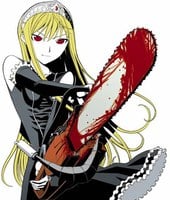
Manga/Anime Review - Princess Resurrection


What up anidorks? I’ve decided to spare you from the usual comedy series and instead take a look at supernatural action series Princess Resurrection.


In thanks for his attempt to save her from a fatal accident, Hime – daughter of the King of Monsters – has granted middle schooler Hiro the gift of eternal life, but on two conditions: First, Hiro must partake of Hime’s blood every few days lest he dies; and secondly, Hiro must remain her servant/bodyguard for eternity as payment. It’s apparent that Hime needs all the help she can get, as her numerous brothers and sisters are intent on killing her and each other to achieve the royal throne. Hime's cohorts - half-breed werewolf Liza, opportunistic vampire Reiki, and Hime’s robot servant Flandre - all have the power to fight of the rival siblings and vengeful monsters out for Hime’s blood, but what can young Hiro do to help protect the life of his new master?

Supernatural-based anime and manga has seen a renaissance as of late, and PR is a solid offering in this genre. Series creator Yasunori Mitsunaga deviates from the popular “vengeful spirits” theme common in contemporary anime and manga*, and instead draws on the “classic horror” of 1950’s drive-ins (ala vampires, werewolves, zombies, and creatures from the Black Lagoon…can the Blob be far behind?) to power this series. Although I do enjoy the more subtle and elegant vibe of traditional Japanese horror, the blood-and-guts, monster-on-monster action of PR is definitely appealing for those of us who grew up on Boris Karloff and not Lufcadio Hearn. Hiro’s persistent need for Hime’s blood adds a nice bit of nasty (and a subtle erotic undertone) to this relatively straight-forward and action based shonen manga series.

That having been said, those of you who are able to view the anime series via ADV or the Anime Network will notice how the series has been “cleaned up”, for lack of a better word – rather than sup on Hime’s blood, Hiro instead gets the gift of Hime’s “Life Flame” (yeesh). It’s a shame that this integral plot element was modified in such a way, but that’s show biz I guess. Along with the overall lower level of gore, I find that the anime also removes a fair amount of gothic creepiness that Mitsunaga was able to impart via his artwork.

Still, the anime is a pleasant enough diversion (particularly after dark!) and the manga series deserves a read from horror and action-lovers alike.

*xxxHolic and Mushi-shi, for example.

Wednesday, February 18, 2009

Anime Review: Toradora


The “psycho eyes” that high school sophomore Ryuuji inherited from his dead gangster dad have terrified his classmates into believing he’s a violent juvenile delinquent – although in actuality he’s just a kind, mild-mannered, and somewhat lonely young fellow. When he finds out that his crush Minorin, the friendly yet airheaded captain of the girl’s softball team, will be in the same class as him, Ryuuji is overjoyed; that is, until he runs afoul of Minorin’s best friend – Aisaka Taiga (aka the “Palmtop Tiger”), whose small size and delicate, doll-like appearance belie her foul temper and capacity for ultra-violence. Barely surviving the encounter, Ryuuji finds a love letter in his bookbag. It’s addressed not to him but Kitamura, Ryuuji’s studious best friend - and it’s from none other than Taiga herself, who seems to have placed it in Ryuuji’s bag by accident.

Bemused by the situation, Ryuuji returns home, only to be awoken at swordpoint by a crazed Taiga, who’s determined to kill Ryuuji for finding out her secret crush. In order to dissuade the pint-sized psychopath from her intended act of murder, Ryuuji vows to help Taiga win Kitamura’s affections; and in thanks, Taiga half-heartedly vows to help Ryuji win Minorin’s love. Their alliance now sealed, Ryuuji and Taiga are soon secretly meeting up during school to plan their “twin-love attack”, but their frequent planning sessions are misconstrued by their classmates as lover’s trysts. Naturally, this rumor makes its way to both Kitamura and Minorin, who become increasingly reluctant to return Ryuuji and Taiga’s ham-fisted flirtations. The arrival of big-city girl Ami, Kitamura’s childhood friend, adds another stumbling block: Ami’s prissy attitude embarrasses Kitamura and infuriates Taiga – but it becomes slowly apparent that Taiga’s rage may less to do with Ami’s big-city airs and more to do with her teasing flirtation with a clearly uncomfortable Ryuuji.

Before long, Taiga has become increasingly reliant on Ryuuji to look after her welfare, a situation that Ryuuji originally views with annoyance, but does little to reverse; she is a truly a “poor little rich girl”, funded by wealthy parents that don’t particularly seem to care for her. Ryuuji, on the other hand, lives in somewhat depressed circumstances – i.e., a rundown apartment shared with his deformed pet canary and boozy bar hostess of a mother who immediately takes a shine to both Taiga’s brassy attitude and increasingly frequent appearances at dinnertime.

Circumstances seem to be drawing Ryuuji and Taiga closer and closer together…but can they allow themselves fall in love with one another?

***

Toradora has it’s origins as a series of light novels*, and it retains a level of literary complexity that one doesn’t often find in “high school hijinks/love comedy” manga and anime. This, of course, work greatly to its credit; yet – as fine as this series is – I have to admit that I often struggle to understand the interactions between Ryuuji and Taiga. Their mutual affection is certainly implied, but there seems to be so little proof; their behavior toward one another is either so combative or hesitant that’s unclear what their real feelings are. During the episodes, I catch myself wondering aloud “Is he really in love with her? Is she in love with him? I don’t get it.” Perhaps the very real Japanese/American cultural gulf is to blame for my confusion, or maybe it’s just my masculine lack of emotional acumen. Still, the fact that Toradora’s emotional nuances are difficult to figure out absolutely wins Toradora my favor; I wish more series would demand even a mild level of challenging interaction from their viewers/readers.

Longtime readers of otakupubliclibrary know that I enjoy/willingly suffer through many a “love comedy”, and it’s my humble opinion that Toradora is probably one of the best and most honest depiction of teen romance currently playing on otaku computer screens – it depicts the frailty of first love without being weepy or wimpy in slightest. Furthermore, this series wins my plaudits because of the fact it’s easy for readers/viewers to visualize both a happy and an unhappy ending to this series; as much as I can see Ryuuji and Taiga together in the end, part of me realizes (and at times, genuinely prefers the fact) that it’s more realistic to see Ryuuji and Taiga both ending up lonely and heartbroken at the series’ conclusion.

I’m aware that a lot of YA librarians wrestle with the problem of using manga as teen literature; Toradora would probably please the “teen issues/problems” crowd that seems to dominate the dialog over teen lit….were it actually being published in the USA. Currently, there are no plans by any North American/European company to release English-Language versions of the original novel, manga, anime, or “visual novel” that have been proved so popular in Japan…shameful, If you ask me.

That having been said, if you simply must flout international copyright law, one can find fan-subbed Toradora episodes available for downloads on several questionable websites; likewise, the clever otaku may find links to a fan-translated version of the light novels through Toradora’s Wikipedia entry. You didn’t hear it from me, kids….

*a uniquely Japanese term for teen-oriented novels with manga-style illustrations; basically, not too different from the stuff you’d see in the Young Adult section in your local Public Library, except with themes more common to anime and manga and/or to the lives of Japanese teens.

Thursday, January 22, 2009

Anime Feature Revies: Dagger of Kamui


Generally I don’t review older anime in this blog, although not from any particular dislike of the older art form; it’s just that most of the older material (Akira, Ghost in the Shell, Yu Yu Hakusho, what have you) has had so much written about it by western writers (fans and otherwise) that I don’t feel my voice can really add much to the conversation. That having been said, I’m going to deviate a little today and take a look at Dagger of Kamui, a full-length feature from 1985.

Wrongly accused of the heinous murders of his adoptive sister and mother, Jiro flees from angry villagers with only an ornate dagger in his possession. As he makes his escape, he crosses paths with Tenkai, a Buddhist priest (and secret agent of the Shogun) who convinces Jiro to enact revenge on his family’s killer. Trapped by Tenkai’s confederates, the sword-wielding man is quickly slain by Jiro, who is then taken under Tenkai’s wing and trained in the ways of ninjitsu. Once his training is complete, Tenkai sends the boy on a mission to recover a lost treasure…but after encountering his biological mother deep in the northern province of Ezo (modern day Hokkaido), Jiro finds out that he’s nothing but a pawn in Tenkai’s master plan to take over Japan – and that the man he had slain in revenge was none other than his own father. When he realizes that his bejeweled dagger is the key to the treasure’s location, Jiro sets off to recover the prize before Tenkai and his henchmen can.

I have to admit that nostalgia plays a part in it’s selection…like Ah My Goddess, Dagger of Kamui is somewhat of a favorite from my early, college years explorations in anime and manga. For someone just getting into the art form, the film’s complex and foreboding storyline, stylized fight sequences, and occasional flashes of hallucinogenic art gave me a taste of what anime (and animation in general) was able to achieve when it strayed from clichés.

So how does it still hold up after all these years? Like most older anime, yes and no. Although there are some creatively rendered villains, the character designs are fairly typical for the mid-80s (i.e. prominent eyebrows and sideburns) and admittedly date the film somewhat. Also, the picture quality is pretty murky – the animation would do well to be cleaned up, but a lesser-known work like this will probably never get it. That having been said, the druggy interludes and stylish fight scenes I remember are still hold up (in terms of visual impact) even after all this time; in this age of rapid-fire, fraction-of-a-second shots, the somber and languorous animation is a pleasant surprise.

Much like the animation, the plot is pretty hit-and-miss itself; the first half of the film (set in the wilderness of Northern Japan) succeeds in being superbly dark and intriguing, but
the action’s shift to 1860s “Old West” America came across as somewhat half-baked. Although I have to give the filmmakers credit for their attempt to blend Japanese and American history, the depiction of the American West is dull and clichéd. The action picks up again in the last half hour (when Jiro returns to Japan), but the momentum of the film is irrevocably lost, and the story’s complexity just becomes convoluted.

Still, there is much to recommend in Dagger of Kamui; the plot’s references to Ainu lore, ninja legends, western colonialism, and the collapse of the Japanese feudal system are intriguing and not the usual stuff of anime (ninja legends excluded, of course). Despite it’s occasional murkyness, the animation itself is a fine example of what pre-digital anime was capable of – many current anime features would do well to have as much imagination.
Flawed as it is at times, Dagger of Kamai deserves a larger audience.

Tuesday, December 23, 2008

Anime Review: Moyashimon

As a Christmas present to my readers (all three of them), I’m reviewing and recommending my end-of-year favorite anime, Moyashimon: Tales of Agriculture….


College freshman Tadayasu Sawaki has a secret: ever since he was a child, he has been able to see microbes (tiny microorganisms like bacteria, algae, protozoa, and fungi) without the use of a microscope. Furthermore, they appear to him not as weird single-cell organisms, but as cartoonish little creatures the size of a pencil eraser. When he arrives at a large agricultural university on the outskirts of Tokyo along with his buddy Kei, Sawaki’s unique abilities quickly amaze two of the university’s staff: kindly old microbiologist Dr. Istuki, a friend with Sawaki’s grandfather who’s been looking forward to meeting the exceptional young man for years, and the brash grad student Ms Hasagawa, who in her amazement forces the reluctant Sawaki to identify tray after tray of microbes for her. When Istuki and Hasagawa ask Sawaki to be their research assistant, Sawaki is soon dealing with a whole bunch of bacteria-related incidents and predicaments – from illegal sake-brewing to aphrodisiacs to (ugh) fermented seal carcasses.

It goes without saying that this is probably one of the oddest premises for a series I’ve come across in a long time; it was originally described to me as “college student can see microbes without a microscope, hijinks ensue”, and that matched my first impression of the series. But as I watched, I became impressed with Mayoshimon’s scope and its sheer cleverness; it’s less about adorable little microbes and much more about science, giving viewers both laughs and an easy-to-swallow lesson in basic biology. That’s not to say that Mayoshimon is something you’re gonna want to show in 8th Science class – there’s a few flashes of adult humor, and the genuine offbeat subject matter is hardly gonna attract Naruto or Kare Kano fans. Still, unlike other idiosyncratic series (ala Welcome to the NHK or Sayonara Zetsubou Sensei), there’s little dark humor to be found; Mayoshimon instead relies on relaxed humor, realistic interactions between characters, and a convivial slice-of-life feel to temper it’s outlandishness.

For those who can get around its unlikely premise, Mayoshimon is a real pleasure; Random House publishing imprint Del Ray agrees, because they’ll be releasing the manga for North American audiences in 2009.

Wednesday, December 10, 2008

11 Mini Anime Reviews

What up anidorks? Unfortunately, real life continues to get in the way of me being able to post on a regular basis. I was able to post more often when I had downtime at work, but lately my job has been crazy (more work, less staff) so I don’t really have time write 500+ words about butler anime. Likewise, when I’m at home I’m usually interacting with real, non-animated people that don’t speak Japanese (i.e. my girlfriend).

That having been said, I still find time to watch a fair amount of comedy anime – particularly now that I’ve figured out how to burn my downloaded episodes onto DVD (thanks to Laura S. and her recommendation of Roxio). And what’s on ‘em, dare you ask?

  • Shuffle (Took a long time to download….and not as good as I remembered. Rout faux-sensitive harem comedy even a devoted harem comedy dork can miss.)
  • School Days (Keen love triangle/comedy/slice-of-life/horror series ruined by its preposterous amount of panty shots; sweet baby Jesus, enough with the upskirts! From what I gather, the sensitive treatment of first love and heartbreak soon turns to slasher horror, so I’m interested to see this series progress.)
  • They Are My Noble Masters (Slightly raunchy butler comedy. It was originally an eroge game, so you can guess how it goes. Once you can get past its inherent hentai elements it turns out to be an amusing series.)

  • Hayate the Combat Butler (Wholesome butler comedy. I didn’t really care for it, but it’s clear that the series is geared to a younger crowd; because of that, I may try to show this in my Anime Club.)
  • Zebu Sayonara Zebutsuo Sensei (Alternate version of Sayonara Zebutsuo Sensei…it’s, well, ok. Not perceivably different than the regular series, but maybe I need to watch more.)
  • Rosario Vampire (Average horror comedy: normal guy gets stuck at a high school for monsters – some fearsome, some sexy. I had considered reviewing this series at one point, but it proved to be rather formulaic after a few viewings)
  • Master Magician Negi (Another Ken Akumatsu harem comedy. I may do a review of this in the future, if only to review all of his series. This one ups the harem quotient by having one guy and 30 women, so the obvious outlandishness of the formula has got me intrigued.)

  • Mahoraba Heartfelt Days (pleasantly innocent “wacky apartment building”-style comedy series along the lines of Maison Ikkokou. Nothing amazing, but it’s sweet, low-stress vibe is appealing. Like Negi, I may review this in the future when I’ve completed the series.)
  • Tonagara (zany and ecchi comedy…teenage girl finds out her childhood crush is now a gross oversexed dork, i.e. your typical teenage boy. The “will they or won’t they?” tone is funny at first but the humor doesn’t hold up.)

  • Moyashimon (Bizarre microbe science comedy, and remarkably good. I plan to review this one soon.)
  • Toradora (My current favorite, this newer series – still being shown in Japan – is based on a series of light novels I’ve started reading as well. 2 high school classmates discover they have crushes on each other’s best friends, but their vow to help each other out has unintended consequences. Like Moyashimon, this one is going to be reviewed before long)

One of the joys I’ve found with watching a variety of individual episodes of different series at once is that I can avoid the burnout that I get watching the same series from beginning to end. Likewise, many series are better in small, occasional doses as opposed to heaping helpings. The one downside is that instead of having 1 or 2 awful J-Pop themes songs stuck in your heard, you have 4 or 5. Lord.


Anyway, I just put in an order for Persona 4, a new PS2 JRPG with an anime/dating-sim twist. I’ve been hoping to include reviews of anime-themed games here at Otaku Public Library, so perhaps this will be the first one. We’ll see. A few weeks back, I tried playing Samurai Champloo: Sidetracked but the gameplay was poor and the plot was incomprehensible….so no review of that. I’m actually debating the purchase of either an Xbox 360 or a PS3, a decision which is hinging on the number of anime-themed games available for the specific systems: the Xbox 360 has Naruto: Rise of a Ninja, whereas the PS3 has the appealing Valkyria Chronicles, and both have Dynasty Warriors: Gundam. Still, with so few games available for either system, it’s looking like I’m just going to wait for them to either come down in price or release more anime-themed games; in the meantime, I think I’m just gonna grab a $150 Nintendo DS so I can play Bleach: Blade of Fate…

Wednesday, October 15, 2008

NY Anime Fest – Friday Sept 26th

Once again, I was fortunate to attend the New York Anime Fest for free as a “professional”….sweet. Unfortunately, I was stuck with work and personal obligations so I was only able to attend on Friday, the opening day, and only for 4 hours at that. Still, I had a blast taking in screenings (Lucky Star), attending panels (“How to Make in Anime Journalism”…hey, a guy can dream right?), and of course, shopping for Bleach crap while gawking at the cosplay crowd.

I had trouble getting into Lucky Star the first time I saw it, so I figured I’d give it a second try at the 2:45 screening (it was either that or the Naruto: Ninja Clash in the Land of Snow movie…which appeared to be completely unattended, hahaha). Like the Melancholy of Haruhi Suzumiya, I’d heard the hype about Lucky Star but it just didn’t match up to my expectations; it struck me as being a less whimsical, more self-aware and chatty version of Azumanga Diaoh populated by 4 Ayumi “Osaka” Kasugas – a loosely-plotted, character-driven comedy “show about nothing”, ala Seinfeld.


I definitely liked the looseness and goofiness of Lucky Star, but the jokes never really seem to connect; it just devolves into a lot of shaggy-dog stories about food and homework. Still, I do have to give it credit for its deadpan humor and self-deprecating jabs at otaku culture; maybe more episodes would change my mind.

The panel on anime journalism was enlightening, but the basic advice of humility, hard work, and professionalism wasn’t a whole lot different than the advice most aspiring writers are given. The basic message I got? To (badly) paraphrase AC/DC, “It’s a long way to the top if you want to be paid money write about Japanese cartoons”.

In terms of cosplay, the many, many characters of Naruto made a strong showing, but number of folks dressed as Bleach shinigami was pretty impressive too. Loligoths, maids, and Haruhis were in abundance (as to be expected), and I noticed that several folks were done up in Gurren Lagann gear; in fact, FUNamation promoted the series with some cosplay cheesecake. However, the highlight for me was one creative guy dressed as the title character from my personal fav-rave, Sayonara Zebutseuo Sensei! Nice work, dude. I tried taking a few photos with my cell phone of various cosplayers but the results were blurry and pitiful….

In any event, I was going to include pictures and descriptions of all my purchases, but I think that’s better off in a separate post; for those of you dying to see the Rukia figurines and Full Metal Panic DVDs I purchased, I’m afraid you’ll have to wait until next week….

Thursday, August 7, 2008

ANIME REVIEW - The Melancholy of Haruhi Suzumiya


Like most teens, high school freshman Kyon is trying to make peace with what he believes is a profoundly dull existence. When his attractive but eccentric classmate Haruhi announces to their class that she “only wants to meet espers (psychics), aliens, and future men”, Kyon’s teasing convinces the strong-willed and haughty Haruhi to form her own club devoted to finding the afore-mentioned psychics, aliens, and time travelers – and Kyon is to be her first member, willing or not! Haruhi’s forcefulness soon finds the pair an unused club room, and Haruhi soon recruits/strong-arms 3 other classmates into joining the “SOS Brigade”: the quiet, bookish Yuki, handsome and easy going Koizumi, and the sweet but timid Mikuru. Despite Haruhi’s demanding personality, all seems fine…until the 3 new members privately reveal to Kyon that they are, in fact, either an alien (Yuki), a psychic (Koizumi), or a time traveler (Mikaru). Furthermore, they have all been sent to monitor Haruhi – who they believe has the unconscious ability to alter reality and the fabric of time and space itself! The only way to prevent serious damage to the universe is to keep Haruhi entertained and to go along with her whims…but can the cynical Kyon keep up the façade?

***

Judging from the both the number of Haruhi Suzumiya cosplayers and MoHS-related merchandise I’ve seen, I was well aware of the MoHS phenomena going in; and when Koizumi, Yuki, and Mikaru each revealed the nature of Haruhi’s powers, I began to look forward to the idea that the series was going to a weird philosophical turn. Unfortunately, this plot element is never really resolved; it’s left as a red herring, and is only occasionally referenced later. And what does happen in the series is, well, a little lame: Haruhi cons a computer off the school computer club! Haruhi solves a (fake) murder! Haruhi makes the club join a baseball tournament! Haruhi dresses in a bunny-girl costume and plays rock n’ roll at the school fair! Golly!

This is all entertaining and charming, but its rote - nothing that hasn’t been done in any number of high-school comedy anime series. MoHS definitely has flash, great art, and likeable characters, but there’s just not a lot of substance – at least, not enough to deserve all the hype it’s gotten. The interesting ideas and plot twists you encounter early on don’t amount to anything; it’s as if the original scriptwriters quit in the middle of the series and were replaced by “high school high-jinks” hacks.

Still, this series has one highly redeeming quality: Haruhi. The fact that she’s actually a strong, attractive, assertive, and smart female lead character that isn’t stuck doing panty-shots the whole series is a refreshing change; I can understand why so many female anime fans are fond of her. I wouldn’t call this a feminist anime (Haruhi’s “forced cosplay” with Mikaru borders on molestation), but the sex jokes are practically non-existent, the female characters are multi-dimensional and not treated like objects, and the male characters (well, Kyon and Koizumi) are thoughtful, sensitive, and obliging; even the cheesecake shots of Yuki, Mikaru, and Haruhi are tastefully done.

To sum it up, MoHS is a big letdown in terms of plot, but enjoyable if you just focus on the characters. I still think there are far better series out there under the radar (cough cough Welcome to the NHK cough Sayonara Zetsubou Sensei cough cough) but MoHS has a charm all it’s own.

Tuesday, June 24, 2008

anime/manga review: Sayonara Zetsubou Sensei


My School Comedy jones continues unabated, so today I’ll be taking a look at a new favorite – Sayonara Zetsubou Sensei (or in English, “Goodbye, Prof. Despair”), which attempts to answer the immortal question: what happens when the world’s most negative man meets the world’s most positive girl?

Moody and melancholy high school teacher Nozuma has decided to end it all by hanging himself in a grove of cherry trees….only to find out that his suicide attempt has been by Kafuka, an insanely optimistic school girl who can’t believe he’s attempting suicide on such a wonderful spring day - and in front of her favorite cherry trees to boot!

Rather than be subjected to her positivistic prattle, the wane young man bolts, and Kafuka continues on to school….where her new homeroom teacher is none other than, yes, Nozuma. To make matters worse, Nozomu realizes that the uber-optimistic Kafuka is the least of his problems - every student in class appears to be total head cases, rivaling their new teacher in neurosis. It’s up to Nozomu to help his student resolve their issues….and serve up a heaping dose of negativity to boot.

SZS is one of those cases where “the whole is more than the sum of its parts” – the theme of “eccentric teacher helping his eccentric students work through their problems” is a withered old chestnut that’s been used by everyone from Great Teacher Onizuka to Welcome Back, Kotter. But creator Koji Kumeta takes this standard school comedy formula and twists it into something utterly unique, mixing blacker-than-black comedy along with offbeat wordplay and pop-culture in-jokes, all done in a refreshingly gothic/minimalist art style – imagine a manga Edward Gorey and you’re almost there.

Visually, this is one of the most striking and original series I’ve watched/read lately, with simple, almost Osamu Tezuka-influenced character designs, eerie gothic flourishes, and a black/white contrast that rivals even Jamie Hernandez (Love and Rockets). Kumeta ups the weirdness quotient by adding vaguely out-of-date clothing, TVs, and buildings, despite the clear inference that the series is set in the present day.

Although most of SZS’s offbeat and dark humor can be easily understood by most readers, I fear that some folks many be put off by how Japan-specific some of the jokes are – like Yakitate Japan, the puns and wordplay comes fast and thick, and the references to Japanese culture (both high and pop) make leave some readers scratching their heads. However, ambitious readers will be rewarded with a bleakly hilarious take on “modern Japanese visual culture”.

It also bears mention that this is the first series that I’ve read/watched that was entirely online – no DVDs or print manga have appeared in the USA as of yet (Del Ray is planning to release the English-language version of the manga sometime in 2009); in the meantime, you can check out fan-subbed versions here:

http://www.sidereel.com/Sayonara_Zetsubo_Sensei
http://www.onemanga.com/Sayonara_Zetsubou_Sensei/

Wednesday, April 30, 2008

Ah! My Goddess!/Oh My Goddess! by Kosuke Fujishima


When a misplaced phone call connects him to the Realm of the Gods, good-hearted but unlucky college student Keiichi inadvertently finds himself the recipient of a wish…and a beautiful goddess named Belldandy is to be the one to fulfill it. When Keiichi’s wish – “to stay with you forever” – is granted, he now has to deal with a goddess (and her two outlandish sisters) living with him!

One of the most popular series outside of Japan, there have been 4 versions of the A! MG! anime (not counting full-length movies and spin-off series). I first saw the original A!MG! anime series back in 1997 as a fan-sub, and it was even old then; it’s been published in manga form since 1989 and shows no sigh of stopping. A! MG! holds a particular place in my heart, as this was the series that introduced me to “real” (i.e. subtitled) anime back in the mid-90s; not only was it the first “fansubbed” series I saw, but it was also one of the first subtitled animation I’d been exposed to as well. I know a lot of you younger folks got your exposure to Naruto, Bleech, etc, via cable, but fan-sub anime was a rare find back in those pre-BitTorrent days.

In terms of storyline, the length of A! MG! precludes a detailed plot overview. There was a certain slap-sticky element to the early stories, as Keiichi was forced to cover up the fact that his new girlfriend was actually a powerful and magical being, while trying to maintain a normal life; once Urd and Skuld entered the series, their mischief and ham-fisted attempts at living like mortals began to drove the plot, along with introduction of more “mystical” elements and action. Due to the fact that both Keiichi and Belldandy are excellent motorcycle riders and mechanics, there has been a large emphasis on racing action during the course of the series as well (which Fujishima excels in depicting).

So, does it hold up after all these years? Well, yes and no. Along with Ureisei Yatsura, this series really popularized the “magical girlfriend” genre that’s been used countless times…so in a sense, the blame for the glut of bland/borderline sexist “magical girlfriend” can be laid at A!MG!’s feet. I’m sure I’m not alone in my perception of series heroine Belldandy as being a little too “perfect”– more often than not, she seems to have little personality and little motivation beyond being nice to Keiichi. However, you’re always stuck dealing with the fact that there’s a certain amount of fan-boy wish fulfillment in any shonen manga series (hell, most manga or comics are basically wish-fulfillment anyway) – and A!MG! is very mild compared to some of the more modern series.

With excellent art* and amazingly detailed mechanical rendering of the many motorbikes and machines that appear in the series, A! MG! remains a charming, good-natured work, (even after 19 years) probably due to the fact that it has a uniquely easy-going feel that’s easy to like and welcoming to non-manga readers. Along with Akira, Neon Genesis Evangelion, and any Rumiko Takahashi series, this is one of those anime/manga works that every self-respecting otaku has been exposed to at least once.

*- (presently, at least - the early art is amazingly dated and “80’s” looking. Fans of 1980’s Masamune Shirow series ala New Dominion Tank Police and Appleseed will know what I mean…)

Thursday, March 13, 2008

Series Review: School Rumble - Jin Kobeyashi


Is it possible to have a crush on a manga series? An intense, manic-depressive (and probably short-lived) obsession that keeps you up at night?

If you can, than I’m definitely crushing - and crushing hard - on School Rumble, a multiple-season anime and on-going manga series (almost 6 years and still going strong). In a way, it’s ironic that I’m so infatuated with School Rumble, as the whole series is a comedy of crushes and the crazy situations and emotions they engender. Tsukamoto Tenma, a plain-jane but scatterbrained high school junior, has fallen head over-heals in love with a boy in her class – the unemotional and eccentric Kurasama Oji. Likewise, class delinquent (and wannabe manga artist) Harima Kenji is secretly in love with Tenma – and he has the same difficulty confessing to her as she does to Kurasuma. This weird love triangle is the heart of the plot, as Tenma and Harima get caught in increasingly odd schemes and entanglements in the desire to confess their love to their respective crushes. This situation is complicated by fact that Tenma’s friend Eri and Tenma’s younger sister Yakumo both find themselves increasingly attracted to Harima, while Kurasama’s and Tenma’s romantic connection grows stronger.

Despite the melodramatic set-up, the series plays the romantic attractions, entanglements and misunderstandings as straight farce and not as a soap opera – laughs are plenty and tears are so rare as to be non-existent (except in Harima’s slapstick bawling over Tenma). The over-the-top personalities of the characters and their comedic misunderstandings are a funny and tongue-in-cheek portrayal of the overwrought emotions typical of the teenage years. One-way love interests abound and there are times that readers may need a graph to help clear up the relationships between the characters – fortunately, the manga provides helpful charts; although the anime doesn’t go into as much detail as the series, viewers will be able to figure it all out without much help. The anime is surprisingly close to manga, although it omits some minor storylines and some of the jokes are lost without the help of the manga translators. Fortunately, the episodic and “sit-com-esque” nature of the both the anime and manga allow readers/viewers to pick up in the middle of the series without much difficulty.

If I have a complaint with the series, it’s the length – in order to extend the series, the creator has added a number of extra characters and sub-plots that draw the reader’s attention away from the main Tenma/Harima plot; at times, it resembles a western superhero comic (i.e. a sprawling cast of characters and no attempt to resolve the plot in sight).

Kobeyashi’s great sense of humor is definitely on display, but the hidden genius of the series is the way he’s been able to twist a standard comedy plot into something new with the eccentric personalities of Tenma and Harima. Tenma is depicted as being somewhat immature and less emotionally aware than the other characters, yet her general good nature gets her through many instances of complete obliviousness. Despite his “tough guy” exterior, Harima is an overly-sensitive and indecisive klutz, and his frequent mishaps put him at odds with a number of the female characters. The supporting cast is full of engaging and offbeat characters as well - the prissy rich-girl Eri, breast-obsessed horndog Imadori, and soft-spoken psychic Yakumo in particular.

The first season of the anime series (26 episodes) can be purchased from FUNamation. Del Ray publishes the English-language adaption of the manga, and currently has the first 8 volume of the series for sale – Vol. 9 will be released in April 2008.

Wannbefansubs.com has a vast and well-written wiki about the School Rumble series which can be accessed here.

Wednesday, February 13, 2008

Recanting on DearS (somewhat)


So I ended up watching the whole DearS series (all 13 episodes), and actually started to like it….. some of it, at least. A new DearS, the uptight and intellectual Miu, enters the series and provides a nice contrast to Ren’s spacey submissiveness, along with Nia, a weird and klutzy DearS catgirl that provides a fair share of comic relief. It’s reveled that Neneko has been harboring a long-standing crush on Takeya, and Takeya’s antipathy to Ren gets more and more exaggerated, providing an increasingly painful conflict - a lot of the sympathy that Takeya’s situation initially inspired began to ebb away as he gets increasingly hotheaded and dismissive toward Ren, even as he simultaneously develops feelings toward her.

Still, there’s way, way more fanservice than I’m comfortable with, and Ms Mitsuka (the characters’ high school teacher) is little more than a one-dimensional nymphomaniac gag that gets old fast. The plot’s pacing is a little off at time, and the series’ climax is dependent on twists that happen in the last few episodes and characters that are barely referenced through most of the series; as usual, this may been better hashed out in the manga that the series is based on.

In any event, I even began to feel a little sad when the end credits flickered on my TV…so I guess the series affected me more than I thought it would (I’m a pretty big softy, though). I still think there are better Anime comedies, but DearS definitely outdid my initial expectations.

Monday, February 4, 2008

Anime Review: DearS


Mysterious but beautiful aliens called DearS (“Dear friends”) arrive on Earth after their malfunctioning spacecraft forces them to make an emergency landing. They decide to embrace the situation, and attempt to live with their Earthling hosts by learning Earthling ways and entering Earthling society. However, an errant and “unprogrammed” Dear called Ren somehow ends up wandering the streets of Tokyo, and falls into care of average high school guy Takeya after he offers her Melon Bread. Next thing he knows, Ren’s followed him home and is addressing him as “master”. It’s up to Takeya and his unflappable gal-pal Neneko to feed, dress, and integrate Ren into normal Japanese life. But is there more to Ren and the DearS than what meets the eye?

When I first took a look at this series, it struck me as being reminiscent of the classic Uresei Yatsura – i.e., an over-amorous female alien latching onto reluctant teen boy. That series’ female protagonist Lum was far more crazy and bad-ass than Aturu, the human guy she followed around; Ren, on the other hand, seems pretty submissive and devoted toward Takeya, and that put a bad taste in my mouth. It could be argued that it’s a Japanese cultural “thing”, but still, I don’t feel comfortable with depictions of women of some sort of willing slaves. However, it appears that Ren’s submissiveness may be some sort of cover, and I'm told that the series apparently takes a turn away from the comedy of the early episodes toward a darker theme…so, seeing how it's a somewhat short series (12 episodes on 4 dvds), I'm willing to give the series another chance.

DearS isn’t bad, but if simply must watch a series involving a female alien chasing a human guy, I think you might be better off with the afore-mentioned UY.

Thursday, January 17, 2008

Anime Review: Martian Successor Nadesico


A wayward starship, a mysterious and reluctant hero, gruesome aliens, and mechs galore…so what does Martian Successor Nadesico have that other space operas like Robotech or Gundam don’t have? Namely, a sense of humor about itself, an offbeat cast of characters, and whole lotta cheesecake (i.e. pretty girls).

Former mech pilot (and current fry cook) Akito Tenkawa joins the crew of the Nadesico, a privately owned starship created to defeat the “Jovian Lizards”, a cruel race of aliens from Jupiter that are determined to invade Earth. Young Akito is equally as determined to remain a fry cook, watch his favorite anime Gekiganger III, and avoid the danger of piloting a mech…but when another pilot injures himself, Akito himself pressed into service. And to make matters worse, the ditzy captain of the Nadesico is none other than his childhood girlfriend Yurika Misamune….who’s still madly in love with Akito and can’t stop throwing herself at him!

Like Full Metal Panic! FUMOFFU, Martian Successor Nadesico is a blend of killer action and hilarious romantic comedy; the interaction between Akito and Yurika is very funny (and embarrassing), and the members of the supporting cast all have unique personalities that make them memorable as well. The “anime with an anime” Gekiganger III is a great backhanded tribute to Mazinger Z, Voltron, and all those other 1970s “giant robot” series that I (and all the other children of the 70’s, hahaha) grew up watching.

This series is over 11 years old, so the animation can seem a little dated at times; aside from that, this is a great series that can appeal to both younger viewers (who’ll love the action and comedy) and older viewers (who’ll dig all the in-jokes) too.

Wednesday, January 2, 2008

Anime Review - "Welcome to the NHK!"


Takahashi Sato is a “hikikomori” – the Japanese word for a recluse or shut-it, usually a young man that isolates himself from society rather than deal with the pressures and stress of school or work. A recent college dropout himself, Sato spends almost all his time alone in his tiny apartment, watching TV and eating noodles. Not surprisingly, he’s become a little nuts and has convinced himself that there is a huge conspiracy determined to him alone and isolated.

However, on a rare trip outside, he finds himself confronted by a mysterious young woman called Misaka. Depite the fact that they've never met, she seems to know a lot about him - particularly the fact he's "hikikomori". She then announces that she wants him to sign a legally-binding contract that would permit her to “un-hikikomori” him! Will she succeed or does she have an ulterior motive? Is she part of the “conspiracy” too? And will all of this convince Sato to follow his dream - designing the greatest dating-simulation video game ever?

Welcome to the NHK is little more emotionally complex than some anime, as it’s able to be both funny and disturbing at the same time - almost like a good “indie movie”. Sato is a pretty pathetic guy, but I found him likeable and couldn’t stop rooting for him; Misaka seemed sweet, yet it became slowly apparent that there was something very weird and unbalanced about her. I won’t deny that there’s a little to no “action” (i.e. no kung-fu fights, mech battles, or magic schoolgirls), so if you need something a little more exciting you might need to look elsewhere. Still, it’s a funny series and I would definitely recommend it to folks looking for something “mature” but also offbeat.

One last thing: Although I wouldn’t call this series explicit, it does get mildly suggestive at time, and the opening animation has plenty of (clothed) female body parts on display…so if you’re under 16 and you get yelled at by your folks for watching this, don’t come crying to me (hahaha).

The first 8 episodes are available from ADV Visions. You can watch a trailer here.