Showing posts with label manga. Show all posts

Wednesday, June 3, 2009

Manga Review - Oh My Goddess! Colors by Kosuke Fujishima

What up anidorks? Long time no post from the old D-man here. Unfortunately, budget shortfalls at work have forced me to focus less on otaku-dom and more on the public library aspect of the job. Thus, I haven’t really had all that much to read/watch anything new or of enough interest to post about.


That having been said....I did recently come across a copy of Oh My Goddess! Colors, a large-sized retrospective of Kosuke Fujishima’s evergreen “magical girlfriend” manga/anime. Starting off with a lighted-hearted/mildly sarcastic intro (“devoid of any actual developments, it’s a sort of romance that sort of wanders aimlessly through 30 plus volumes, like a derelict.”…I couldn’t have put it better myself), OMG! Colors presents a detailed rundown on nearly every element of the series. Belldandy, Urd, Skuld, and Peorth all get individual character summaries, and each are the focus of a representative chapter that has been re-mastered in gorgeous watercolors. Throw in an exhaustive lexicon of OMG! terminology, ruminations on the origins of the goddesses and the physics of their world, exhaustive chapter summaries, in-jokes and translation notes, and a gallery and tech specs of the numerous vehicles owned by the characters and you’ve got a must-have for any OMG! obsessive.

Personally, I’ve been finding OMG! a little repetitive and dated as of late, but reading this reminded me of it’s huge influence on American Otaku, myself included; in fact, Fred Gallagher, creator of the awesome Megatokyo OEL manga, chimes in the series’ influence on him in a short afterword. OMG! detractors may continue to scratch their heads over this series’ unabated popularity, but OMG! Colors expertly captures all that’s good about it – its alluring character design, lush artwork, silly humor, and its ever-unrequited PG-rated romance.

Monday, April 20, 2009

MANGA REVIEW – Oishinbo A la Carte: Japanese Cuisine and Oishinbo A la Carte: Sake, Story by Kariya Testu/Art by Hanasaki Akira

What up anidorks? Today I’m taking a look at a series that I’ve long desired to read, but haven’t been able due to dearth of Haute Cuisine-oriented manga scanlations on onemanga.com – Oishinbo (aka “The Gourmet” in Japanese).


Although lazy and ill-tempered, journalist Yamaoka Shiro of the Tozai News nonetheless possesses one of the most refined palates in Japan – a trait he inherited from his cold, overbearing father, the noted gourmand and artist Kaiban Yuzan. When Yamaoka’s head editor decides to celebrate the paper’s 100th anniversary by publishing the “Ulitmate Menu” – a selection of the finest dishes Japan has to offer – lackadaisical Yamaoka is reluctantly pressed into creating the menu. When he finds out that his father has teamed up with a rival paper to create their own “Supreme Menu”, Yamaoka and his gal-pal/writing partner Kurita Yuko must go head to head (and taste-bud to taste-bud) with Kaiban to find the finest foods in all of Japan!

Rather than publish the whole run (26 years and still going!), Viz has taken the approach of collecting specific chapters from the series dealing with a particular element of Japanese food (i.e. Sake, etc), and creating an “a la Carte” collection of chapters in single volumes. For readers not entirely familiar with the nuances of all-rice sake and the correct way to filet seabream, this offers an easy introduction to Japan’s rich and fascinating food traditions. Casual/lazy reviewers will inevitably compared Oishinbo to Tampopo or Iron Chef, simply because it looks at the unique food culture of Japan in relaxed, easy-to-approach manner. That’s a shame really, because Oishinbo is a work that deserves recognition for its own unique perspective; although there is the occasional plot twist, character development, and cliffhanger endings, it’s less of a narrative-oriented manga and far more of an overview of Japanese cuisine in graphic novel form. Art buffs might find the character design a little rough and dated at times, but it’s obvious that artist Hanasaki is instead focusing on the main element of the series – the food, loving depicted and almost leaping off the page.

It should be said that Oishinbo is probably best for adult readers, but not because of any thematic elements: aside from heated arguments over the best way to serve champagne or the time it takes to learn the techniques of sashimi, the violence and sex is absolutely non-extant. There’s a good chance the series will probably go over the head of most teen manga readers (and to be fair, the numerous adults that think fine dining means Applebee’s), but if you have interest in culinary history or want a unique look at Japanese culture, I can’t recommend Oishinbo enough.

Thursday, March 12, 2009

I forgot to mention....

...that Del Ray released Sayonara, Zetsubou-Sensei V.1: The Power of Negative Thinking on February 24th. You can get it from the usual retailers, and I highly, highly recommend this a purchase for any forward thinking manga or graphic novel fan. Joyce Aurino and Del Ray have done an excellent job of translating and adapting this Japanese Pop-Culture-centric series for western readers; the print version is a definite improvement over the fan-scans I’ve come across. Feel free to check out my gushing review from last June if the mood strikes you....

Wednesday, March 11, 2009

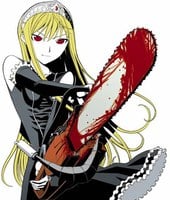
Manga/Anime Review - Princess Resurrection


What up anidorks? I’ve decided to spare you from the usual comedy series and instead take a look at supernatural action series Princess Resurrection.


In thanks for his attempt to save her from a fatal accident, Hime – daughter of the King of Monsters – has granted middle schooler Hiro the gift of eternal life, but on two conditions: First, Hiro must partake of Hime’s blood every few days lest he dies; and secondly, Hiro must remain her servant/bodyguard for eternity as payment. It’s apparent that Hime needs all the help she can get, as her numerous brothers and sisters are intent on killing her and each other to achieve the royal throne. Hime's cohorts - half-breed werewolf Liza, opportunistic vampire Reiki, and Hime’s robot servant Flandre - all have the power to fight of the rival siblings and vengeful monsters out for Hime’s blood, but what can young Hiro do to help protect the life of his new master?

Supernatural-based anime and manga has seen a renaissance as of late, and PR is a solid offering in this genre. Series creator Yasunori Mitsunaga deviates from the popular “vengeful spirits” theme common in contemporary anime and manga*, and instead draws on the “classic horror” of 1950’s drive-ins (ala vampires, werewolves, zombies, and creatures from the Black Lagoon…can the Blob be far behind?) to power this series. Although I do enjoy the more subtle and elegant vibe of traditional Japanese horror, the blood-and-guts, monster-on-monster action of PR is definitely appealing for those of us who grew up on Boris Karloff and not Lufcadio Hearn. Hiro’s persistent need for Hime’s blood adds a nice bit of nasty (and a subtle erotic undertone) to this relatively straight-forward and action based shonen manga series.

That having been said, those of you who are able to view the anime series via ADV or the Anime Network will notice how the series has been “cleaned up”, for lack of a better word – rather than sup on Hime’s blood, Hiro instead gets the gift of Hime’s “Life Flame” (yeesh). It’s a shame that this integral plot element was modified in such a way, but that’s show biz I guess. Along with the overall lower level of gore, I find that the anime also removes a fair amount of gothic creepiness that Mitsunaga was able to impart via his artwork.

Still, the anime is a pleasant enough diversion (particularly after dark!) and the manga series deserves a read from horror and action-lovers alike.

*xxxHolic and Mushi-shi, for example.

Monday, September 15, 2008

Manga Review: Kekkaishi v. 1 (w/ bonus mini-Manga Review: Othello, v. 1 + 2)

Today I’m taking a look at two works from different ends of the spectrum: the “uber shonen”-style Kekkaishi and the winsome shojo Othello. First, Kekkaishi...


Although Yoshimori has inherited the power and abilities of his family’s demon-hunting art, he’s reluctant to truly commit himself to his duty of carrying on the family business of protecting the community…until his neighbor (and crush/childhood friend), rival demon-hunter Tokine is seriously injured by his inattention and half-heartedness. 5 years later on, Yoshimori is far more committed - but his stubbornness, uncontrollable sweet-tooth, and unabated crush on Tokine are still causing problems. As their local high school/junior high is the magnet for all sorts of ghouls, ghosts, and goblins, Yoshimori and Tokine (along with their spectral canine sidekicks, Madarao and Hakubi) have to learn to stop butting heads and instead team up to fight the endless array of evil spirits threatening their school.

Kekkaishi is prime example of the current shonen style of manga: an excitable, impetuous young hero who’s enormously talented (but stubborn and sort of lazy) has to hunt down rouge spirits and angry demons with the help of a loyal but wise-cracking sidekick; some readers out there will probably recognize this as being the exact plot as Bleach. The “excitable but lazy young guy” has long been a stock manga hero, but “demon-hunting” heroes seem to be especially popular these days; in fact, I’d say it’s replaced the Dragonball Z-style “ultimate fighter”/brawl as the shonen formula de jour (The “supernatural” has long had long been a popular topic in Japanese culture, and an astute anime/manga buff can observe it has provided the base of a wide range of current manga and anime – see XXXholic, Princess Resurrection, Hell Girl, Vampire Rosario, etc).

Still, formulaic as Kekkaishi is, there are some redeeming qualities. The occasional use of traditional Japanese ukiyo-e “ghost pictures” is a nice contrast to the sturdy, simple artwork that makes up most of the manga. The clan rivalry between Yoshimori’s and Tokine’s families harks back to old samurai traditions, but it’s cleverly played for humor: the “rival clans” act more like argumentative neighbors fighting over lawn clippings rather than inheritors of a proud warrior culture.

Although it’s not breaking any new ground, Kekkaishi at least succeeds in being a straight-forward and accessible take on the current shonen formula; older readers will have probably seen it all before, but younger ones will eat it up.
____


I also wanted to mention Othello…yes, the Shakespeare classic. Haha. Naw, by Othello I mean Satomi Ikezawa’s shojo manga, named for the board game Othello. Longtime readers know I usually steer clear of the shojo stuff (those huge, glistening eyes just creep me out, honestly), but a chance reading of vols 1 and 2 reveled Othello to be an entertaining take on the old Jekyll and Hyde formula: Yaya is a quiet, shy, bullied high school girl who occasionally transforms into Nana, a flamboyant, bad-ass rocker chick that’s prone to acting on Yaya’s repressed yearnings…specifically, enacting revenge on Yaya’s cruel classmates and boldly flirting with Moriyama, the handsome musician Yaya’s been quietly crushing on.

With a tight, plot-driven structure, Othello lacks the complex social/romantic structure of many shojo manga, and focuses more on purely Japanese growing pains – bullying, Loligoth cosplay, J-Rock, and a still-traditional relation between the sexes. The artwork also tends toward realism, i.e. no over the top bishonen/bishojo, chibi sidekicks, or overly cutesy characters. Both of these factors will make Othello attractive to older or occasional manga readers – guys too.

Thursday, July 17, 2008

Manga Review – Pumpkin Scissors Vo1 1 and 2 by Iwanaga Ryotaro


Although the terrible war between the Empire and the Republic of Frost has ended, the war’s horrors remain – destruction, disease, hunger, crime, and corruption. In an attempt to try and remedy some of the situation, the Imperial Army has created State Section III (aka “Pumpkin Scissors” for its ability to “snip” through the thick “pumpkin shell” of corruption and desperation) to combat banditry and aid in the relief and reconstruction of the Empire. But with little respect and even less funding, Pumpkin Scissors - and it’s proud but strident field commander 2nd Lt Alice L. Malvin – have their hands full combating the crime and deprivation that plagues the Imperial countryside. When the platoon receives assistance from a kindly but mysterious ex-solider named Randel Orland, they’re shocked to find out that the “gentle giant” they befriended is actually a former member of a secret tank-killing brigade - and a deadly and unstoppable killing machine in his own right. With Randel at their side, Pumpkin Scissors must confront angry civilians, bent politicians, and thuggish ex-soldiers, and a secret and bloodthirsty military organization known only as the “Invisible 9” - who may hold the key to Randel’s mysterious past….

Similar to the classic Patlabor series in it’s “bad division” formula (i.e. a misunderstood and unpopular brigade of talented eccentrics use their skill and bravery to slowly win the respect and admiration of friend and foe alike), PS wins points for it’s setting and characterizations; Iwanaga creatively choose to set the series in a fictional version of 1930’s Europe (albeit with slight Japanese social overtones), with the resulting technology of the day – without wireless radios, jets, or submachine guns, the action is a gritty mix of tanks, rifles, and sheer guts. Iwanaga also uses humor to good degree; with the exception of Randel, the personal of Pumpkin Scissors are obviously pencil-pushers unsuited to the stress of actual combat. The art is a little rough at first but soon improves to a style that’s both cartoonish and sharp, and the action scenes are exciting and well-rendered.

All in all, Pumpkin Scissors is a well-done and straightforward action series with elements of humor and political intrigue; I look forward to subsequent volumes.

Thursday, July 10, 2008

Manga Review - A.I. Love You – Vol 1 by Ken Akumatsu


Ken Akumatsu is known primarily through his seminal harem comedy Love Hina (hey, another Love Hina ref on this blog! What does that make, #476?) and his newer magical action/fan-service extravaganza Negima! Master Negi Magi…but before he truly began to master the art of panty-shots, he wrote this series. And wow, what a difference 5 years makes in terms of a mangaka’s abilities.

Computer nerd Hitoshi gets absolutely zero female attention – with the exception of No. 30, the kind and caring life-like Artificial Intelligence program he’s created on his computer. When a freak electrical storm turns No. 30 into a real girl, Hitoshi must juggle their nascent relationship with her weird powers and origin….

Yeah yeah yeah, we’ve heard all it before!

Now, I dig rote manga storytelling as much as the next dork, but I’ll be damned if this isn’t a dull retread of Ah! My Goddess (mixed with a little of Weird Science). Shall we count the similarities?


1. Hero is physically unimpressive, has few talents (aside from some technical skills), and is unpopular with the ladies.
2. Despite being somewhat naïve, the Heroine is caring, giving, beautiful, and utterly devoted to the Hero.
3. Heroine can communicate with and control electrical/mechanical devices.
4. Heroine has two female “siblings” that appear later in the series – a sexy older one and a precocious younger one.
5. Artwork goes from awful to awesome over the course of the series.
6. Characters all attend Nekomi Institute of Technology (joke).

From what I’ve seen of A.I. Love You (which I grant is only Vol. 1), its best left to Akumatsu nuts or people who love the Ah! My Goddess “magical girlfriend” formula so much that they’re willing to read a sub-standard copy.

Still, we all have to start somewhere, and a talented mangaka like Akumatsu can be forgiven for crude artwork and a derivative storylines in their early work – part of the joy of manga (and graphic novels in general) is seeing the creators grow and mature over time.

Tuesday, June 24, 2008

anime/manga review: Sayonara Zetsubou Sensei


My School Comedy jones continues unabated, so today I’ll be taking a look at a new favorite – Sayonara Zetsubou Sensei (or in English, “Goodbye, Prof. Despair”), which attempts to answer the immortal question: what happens when the world’s most negative man meets the world’s most positive girl?

Moody and melancholy high school teacher Nozuma has decided to end it all by hanging himself in a grove of cherry trees….only to find out that his suicide attempt has been by Kafuka, an insanely optimistic school girl who can’t believe he’s attempting suicide on such a wonderful spring day - and in front of her favorite cherry trees to boot!

Rather than be subjected to her positivistic prattle, the wane young man bolts, and Kafuka continues on to school….where her new homeroom teacher is none other than, yes, Nozuma. To make matters worse, Nozomu realizes that the uber-optimistic Kafuka is the least of his problems - every student in class appears to be total head cases, rivaling their new teacher in neurosis. It’s up to Nozomu to help his student resolve their issues….and serve up a heaping dose of negativity to boot.

SZS is one of those cases where “the whole is more than the sum of its parts” – the theme of “eccentric teacher helping his eccentric students work through their problems” is a withered old chestnut that’s been used by everyone from Great Teacher Onizuka to Welcome Back, Kotter. But creator Koji Kumeta takes this standard school comedy formula and twists it into something utterly unique, mixing blacker-than-black comedy along with offbeat wordplay and pop-culture in-jokes, all done in a refreshingly gothic/minimalist art style – imagine a manga Edward Gorey and you’re almost there.

Visually, this is one of the most striking and original series I’ve watched/read lately, with simple, almost Osamu Tezuka-influenced character designs, eerie gothic flourishes, and a black/white contrast that rivals even Jamie Hernandez (Love and Rockets). Kumeta ups the weirdness quotient by adding vaguely out-of-date clothing, TVs, and buildings, despite the clear inference that the series is set in the present day.

Although most of SZS’s offbeat and dark humor can be easily understood by most readers, I fear that some folks many be put off by how Japan-specific some of the jokes are – like Yakitate Japan, the puns and wordplay comes fast and thick, and the references to Japanese culture (both high and pop) make leave some readers scratching their heads. However, ambitious readers will be rewarded with a bleakly hilarious take on “modern Japanese visual culture”.

It also bears mention that this is the first series that I’ve read/watched that was entirely online – no DVDs or print manga have appeared in the USA as of yet (Del Ray is planning to release the English-language version of the manga sometime in 2009); in the meantime, you can check out fan-subbed versions here:

http://www.sidereel.com/Sayonara_Zetsubo_Sensei
http://www.onemanga.com/Sayonara_Zetsubou_Sensei/

Wednesday, April 30, 2008

Ah! My Goddess!/Oh My Goddess! by Kosuke Fujishima


When a misplaced phone call connects him to the Realm of the Gods, good-hearted but unlucky college student Keiichi inadvertently finds himself the recipient of a wish…and a beautiful goddess named Belldandy is to be the one to fulfill it. When Keiichi’s wish – “to stay with you forever” – is granted, he now has to deal with a goddess (and her two outlandish sisters) living with him!

One of the most popular series outside of Japan, there have been 4 versions of the A! MG! anime (not counting full-length movies and spin-off series). I first saw the original A!MG! anime series back in 1997 as a fan-sub, and it was even old then; it’s been published in manga form since 1989 and shows no sigh of stopping. A! MG! holds a particular place in my heart, as this was the series that introduced me to “real” (i.e. subtitled) anime back in the mid-90s; not only was it the first “fansubbed” series I saw, but it was also one of the first subtitled animation I’d been exposed to as well. I know a lot of you younger folks got your exposure to Naruto, Bleech, etc, via cable, but fan-sub anime was a rare find back in those pre-BitTorrent days.

In terms of storyline, the length of A! MG! precludes a detailed plot overview. There was a certain slap-sticky element to the early stories, as Keiichi was forced to cover up the fact that his new girlfriend was actually a powerful and magical being, while trying to maintain a normal life; once Urd and Skuld entered the series, their mischief and ham-fisted attempts at living like mortals began to drove the plot, along with introduction of more “mystical” elements and action. Due to the fact that both Keiichi and Belldandy are excellent motorcycle riders and mechanics, there has been a large emphasis on racing action during the course of the series as well (which Fujishima excels in depicting).

So, does it hold up after all these years? Well, yes and no. Along with Ureisei Yatsura, this series really popularized the “magical girlfriend” genre that’s been used countless times…so in a sense, the blame for the glut of bland/borderline sexist “magical girlfriend” can be laid at A!MG!’s feet. I’m sure I’m not alone in my perception of series heroine Belldandy as being a little too “perfect”– more often than not, she seems to have little personality and little motivation beyond being nice to Keiichi. However, you’re always stuck dealing with the fact that there’s a certain amount of fan-boy wish fulfillment in any shonen manga series (hell, most manga or comics are basically wish-fulfillment anyway) – and A!MG! is very mild compared to some of the more modern series.

With excellent art* and amazingly detailed mechanical rendering of the many motorbikes and machines that appear in the series, A! MG! remains a charming, good-natured work, (even after 19 years) probably due to the fact that it has a uniquely easy-going feel that’s easy to like and welcoming to non-manga readers. Along with Akira, Neon Genesis Evangelion, and any Rumiko Takahashi series, this is one of those anime/manga works that every self-respecting otaku has been exposed to at least once.

*- (presently, at least - the early art is amazingly dated and “80’s” looking. Fans of 1980’s Masamune Shirow series ala New Dominion Tank Police and Appleseed will know what I mean…)

Monday, April 28, 2008

Mini-Manga Review: Kagetora, by Akira Segami


After years of training, teenage ninja Kagetora gets the job he’s been waiting for – tutoring and protecting the young heir of a renowned martial arts family in the skills of the warrior. Unfortunately, sweet schoolgirl Yuki is a bit of a klutz and has trouble learning the basic moves – and even worse, Kagetora has begun to develop feelings for her. Can he teach his student the skills she needs without compromising his duty as a ninja?

Although it makes a decent attempt to be a funny and heartfelt work, Kagetora ends up as a rather average manga. The plot is simplistic and episodic, mostly centering on Kagetora or Yuki misinterpreting the other’s words or actions; the blandly-rendered characters communicate mainly through surprised or sappy expressions, with several needless instances of fanservice to boot.

This series might have been at least saved by savvy characterizations, but both the main and supporting characters are one-dimensional and are defined more by what character “type” they are supposed represent than by what they actually say or do. Despite being the heroine of the work, Yuki doesn’t have much motivation or personality beyond getting frustrated with her training or quietly crushing on Kagetora; likewise, Kagetora spends much of the work over-reacting to Yuki’s gentle flirtations and endlessly debating about his duty as a ninja.

It seems Kagetora’s intended audience is younger readers, who might be a good “gateway” series to kids that enjoy the “ninja style” and humor of Naruto, but are ready for something with a little more emotional depth; in fact, Kagetora could make for a snappy, once-in-a-while read for older (i.e. adult) readers as well.

I don’t think it’s going to make anyone’s Top Ten list…but Kagetora does succeed in at least being a likeable, if average, series.

Tuesday, April 15, 2008

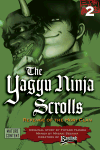
Manga Review - The Yagyu Ninja Scrolls: Revenge of the Hori Clan, Vol 2. Futaro Yamada, story/Masaki Segawa, art


When the men of the Hori clan rebel against the villainous Lord Akinairi, he orders them to be mercilessly slaughtered by a group of blood-thirsty ninjas known as “The Aizu Seven Spears”. Enraged by the callous murder of their brothers, fathers, and husbands, the 7 surviving women of the clan turn to a vagabond swordsman named Yagyu Jubei for training in the ways of war and leadership in their quest for revenge. Jubei is no starry-eyed optimist, and warns the women that most of them can expect either torture or death at the hands of Akinari and the Seven Spears if they choose to fight back. Undaunted, all 7 women agree to train and fight the Seven Spears – or die trying!

This manga’s basic plot – a cocky, wandering swordsman fighting off 7 weird opponents – is essentially the same plot as the classic Ninja Scroll movie and the Samurai Showdown video game. Interestingly, all three of these works are drawn from the writings of Futaro Yamada, who effectively laid the groundwork for the modern depiction of the ninja in his 1960’s series of Ninpocho novels. Main protagonist Yagyu Jubei is a popular Japanese folk hero, and like fellow wandering swordsman Miyamoto Musashi, his legendary exploits have been depicted in dozens of books, manga, and films

There are slightly fantastic elements to this series, but very little of the outlandish video-game like costumes or characters you often see in “ninja” series (or even in Masaki’s previous ninja-centric Basilisk); this is a much more “realistic”* depiction of the art of ninjitsu than the average Naruto reader may be used to. The watercolor-influenced shading and tinting gives a luminous feeling to what is basically a very dark and foreboding art style. Masaki succeeds in making the Seven Spears look truly villainous, and Jubei and the Hori woman aren’t spared either. As handsome as he is, Jubei spends most of the volume looking like smirking lecher, a quality that his constant 5 o’clock shadow and missing eye do nothing to help. The Hori women are both eerily beautiful yet terrifying when angry; when their doe eyes narrow in fury, they truly resemble the female demon masks that they wear to hide their identities.

With the exception of the characters of Sakura and Ofue, most of the seven Hori women are somewhat similar in their appearance and personality - but I hope that the following volumes will draw out the character of each one of them. I also enjoyed the depiction of the Hori woman as brave and willing participants in their fate, rather than anonymous objects; even in the course of this one volume, one can see them gain in strength and ability.

In this volume, a devil-masked Jubei confronts the sickle-and-chain wielding Tessi of the Seven Spears, and barely escapes with his life. Tessi reports back to the Seven Spears, and they debate the origin of their new and unknown opponent; meanwhile, the Hori women begin their training with Jubei. Rough and painful as the training is, the women remain committed. When it comes to light that fiendish Tessi is attempting to sell 6 young women into sex slavery, the Hori women must use their new-found skills – and Jubei’s tactics of subterfuge – to kill Tessi. Are they ready?

This series has a well-deserved Mature Rating – so much like Welcome to the NHK, don’t come crying to me if your mom gets pissed when she finds this in your bookbag, kids.

* Even then, this is a far cry from the real-life exploits of the historical ninja

Friday, March 28, 2008

“Harem Comedy Strikes Back”: Manga Review – Love Hina, v1 – v5


Well, by doing a review of this seminal shonen comedy I’m reneging on my vow to cease and desist from Harem Comedy, but I was killing time in a bookstore, and decided to take a look at the manga version of one of my favorite anime series…and of course, I got hooked. HC haters, avert your eyes…..

-----------

Clumsy and dorky Keitaro has had one dream his whole life – to fulfill a promise to his one childhood sweetheart and get into the prestigious Tokyo University. In order to get the peace and quiet he needs for studying, he moves in with his onsen-owning grandmother – only to find out that the once-quiet Hinata House is now an all-girls dormitory that he owns the deed to!

The 5 young women living at the dormitory – crafty boozehound Kitsune, samurai girl Mokoto, wild Su, shy Shinobu, and temperamental brainiac Naru – are hardly found of having a man live at their dorm, much less as their landlord. Even though his clumsiness gets him into constant trouble with the young women, eternal optimist Keitaro vows to stay on and get in to Tokyo U no matter what torment the girls might put him through.

As this is a whopping 14 volume series (how many beatings can one guy take?), so even the first 5 volumes is just skimming the surface. A little white lie by Keitaro leads the women believe that he’s actually a Tokyo U student (and not just a penniless ronin), but his lie is soon revealed, much to their disgust. Fortunately, Naru tells Keitaro that she too is studying to get into Tokyo U, and is at the top of her class to boot. Despite her disgust with Keitaro, she begrudgingly begins to tutor him. When Keitaro mentions his motivation to get into Tokyo U, Naru explains she made a similar promise when she was younger – which gets Keitaro to wondering if Naru is actually his unnamed childhood crush. Unfortunately, Keitaro’s clumsiness continuity embarrasses the hot-tempered Naru, who doesn’t go easy in her beat-downs of luckless Keitaro.

After he flunks the entrance tests to Tokyo U, Keitaro leaves town to clear his head in Kyoto – only to find out that Naru has flunked herself and has also gone on an impromptu vacation to Kyoto as well. They continue to butt heads in Kyoto until they meet fellow Tokyo U reject Mutsumi, a frail young woman who’s almost as klutzy and unlucky as Keitaro. Obviously attracted to Keitaro, Mutsumi joins on as their traveling companion, much to increasingly jealous Naru’s disgust. Meanwhile, Naru and Keitaro’s sudden departures alarm the other women at the house, who set off in search of the two: Su and Shinobu get their directions completely wrong, and end up in frigid Hokkaido, while Kitsune soon drinks away all of her and Mokoto’s money, forcing them to perform sword-tricks on the streets of Kyoto.

Once all the characters are reunited, Mutsumi send Keitaro off with a passionate kiss that infuriates Naru. But when Keitaro is forced to find a part-time job with Seta - an eccentric but handsome Tokyo U professor - he soon finds out that Seta is none other than Naru’s old tutor…and her childhood crush. Seta’s sudden appearance throws Naru into confusion about her feelings towards Keitaro, who has his hands full babysitting Seta’s mischievous daughter Sarah. Meanwhile, shy and awkward Shinobu starts to get a crush on Keitaro, so in order to teach Shinobu correct kissing techniques, child genius Su creates a special “Kissing Robot” – which soon goes out of control. Sly Kitsune continues to come up with plans to get Naru and Keitaro together…and when they don’t work, she drunkenly attempts to seduce a clearly uncomfortable and unwilling Keitaro. And just when Naru and Keitaro have worked up the courage to confess their attraction to one other, Keitaro-loving Mutsumi shows up and announces that she’s now their next-door neighbor!

Whew! That’s the first 5 volumes (and ok, part of the vol 6) in a nutshell.

As much as I enjoy Love Hina, I do have to say that it’s is not going to appeal to some people; although there’s no graphic sex or straight-up raunchy humor, there is a hell of a lot of panty-flashes, cleavage shots, and butts galore. Likewise, Keitaro’s clumsiness results in most of the Hinata House women – Naru in particular – getting exposed, accidentally felt up, or laying in suggestive positions. I’m aware that all of this is played for comedy and that Keitaro inevitable gets a beat-down when these incidents occur, but it does get awfully needless at times – and that has to be my biggest complaint about the series.

Still, aside from the fanservice, I always get a huge kick of Love Hina. Ken Akamatsu’s artwork is clean, crisp, and contemporary (you can tell that Wataru Wantanabe from Densha Otoko: The Story of the Train Man Who Fell in Love With A Girl was clearly influenced by Akamatsu’s style), and he obviously has a knack for depicting the female form (see above), as well as a gift for depicting physical humor; you can tell he had a good time drawing the art.

Although a typical “harem comedy” in many respects, Love Hina is unique in both the quality of its humor and Akamatsu’s genuine love for his characters. The women of Hinata House obviously hold the upper hand in the household and in their relationship with Keitaro, forcing the hapless Keitaro to labor hard in order to win even their grudging respect, although they come to like (and even love) him over time. This is not the usual plot of most harem comedies, in which the female characters are attracted to the male protagonist straight off the bat (see DearS, Girls Bravo, Shuffle!, etc), and it’s this singular quality of Love Hina that makes it such a special and likeable series. Notwithstanding the fact that their personalities are a little one-dimensional at times, the supporting cast of Su, Kitsune, Shinobu, Mokoto, and Mutsumi all get their “time in the sun” and become progressively multi-faceted and realistic. Likewise, Naru is hardly the stereotypical harem comedy “crush-object”, and is a strong and smart character who’s more that a match for her male suitors*.

I could get a little far-out and say that Love Hina is less about the comedy and the relationships, and more in the vein of a classic coming of age-story - and that Keitaro is a classic example of the Japanese hero whose “stick-to-it-tiveness” saves the day….but I won’t. When all is said and done, Love Hina is just a sweet and funny series filled with likeable characters that deals with the most basic of stories – boy meets girl.

* Does all of this counter the liberal fanservice? That’s up to you, the reader….

Thursday, March 13, 2008

Series Review: School Rumble - Jin Kobeyashi


Is it possible to have a crush on a manga series? An intense, manic-depressive (and probably short-lived) obsession that keeps you up at night?

If you can, than I’m definitely crushing - and crushing hard - on School Rumble, a multiple-season anime and on-going manga series (almost 6 years and still going strong). In a way, it’s ironic that I’m so infatuated with School Rumble, as the whole series is a comedy of crushes and the crazy situations and emotions they engender. Tsukamoto Tenma, a plain-jane but scatterbrained high school junior, has fallen head over-heals in love with a boy in her class – the unemotional and eccentric Kurasama Oji. Likewise, class delinquent (and wannabe manga artist) Harima Kenji is secretly in love with Tenma – and he has the same difficulty confessing to her as she does to Kurasuma. This weird love triangle is the heart of the plot, as Tenma and Harima get caught in increasingly odd schemes and entanglements in the desire to confess their love to their respective crushes. This situation is complicated by fact that Tenma’s friend Eri and Tenma’s younger sister Yakumo both find themselves increasingly attracted to Harima, while Kurasama’s and Tenma’s romantic connection grows stronger.

Despite the melodramatic set-up, the series plays the romantic attractions, entanglements and misunderstandings as straight farce and not as a soap opera – laughs are plenty and tears are so rare as to be non-existent (except in Harima’s slapstick bawling over Tenma). The over-the-top personalities of the characters and their comedic misunderstandings are a funny and tongue-in-cheek portrayal of the overwrought emotions typical of the teenage years. One-way love interests abound and there are times that readers may need a graph to help clear up the relationships between the characters – fortunately, the manga provides helpful charts; although the anime doesn’t go into as much detail as the series, viewers will be able to figure it all out without much help. The anime is surprisingly close to manga, although it omits some minor storylines and some of the jokes are lost without the help of the manga translators. Fortunately, the episodic and “sit-com-esque” nature of the both the anime and manga allow readers/viewers to pick up in the middle of the series without much difficulty.

If I have a complaint with the series, it’s the length – in order to extend the series, the creator has added a number of extra characters and sub-plots that draw the reader’s attention away from the main Tenma/Harima plot; at times, it resembles a western superhero comic (i.e. a sprawling cast of characters and no attempt to resolve the plot in sight).

Kobeyashi’s great sense of humor is definitely on display, but the hidden genius of the series is the way he’s been able to twist a standard comedy plot into something new with the eccentric personalities of Tenma and Harima. Tenma is depicted as being somewhat immature and less emotionally aware than the other characters, yet her general good nature gets her through many instances of complete obliviousness. Despite his “tough guy” exterior, Harima is an overly-sensitive and indecisive klutz, and his frequent mishaps put him at odds with a number of the female characters. The supporting cast is full of engaging and offbeat characters as well - the prissy rich-girl Eri, breast-obsessed horndog Imadori, and soft-spoken psychic Yakumo in particular.

The first season of the anime series (26 episodes) can be purchased from FUNamation. Del Ray publishes the English-language adaption of the manga, and currently has the first 8 volume of the series for sale – Vol. 9 will be released in April 2008.

Wannbefansubs.com has a vast and well-written wiki about the School Rumble series which can be accessed here.

Thursday, March 6, 2008

Another reason to never leave my apartment

www.onemanga.com

I just happened upon this website and am totally floored. A website that has 1000's of scanned mangas? Even esoteric and hard to find titles like Bowling King, Eyeshield 21, and Addicted to Curry?

I don't know how strictly legal this all is...but I know what I'm doing for the next few weeks straight!

Tuesday, February 26, 2008

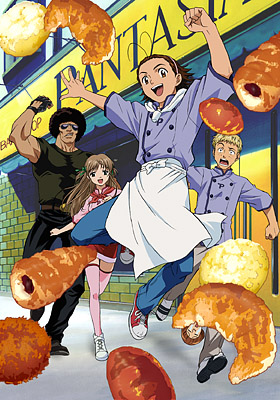
MANGA REVIEW: Yakitate!! Japan, v1 – Takashi Hashiguchi


Although I’ve been pretty addicted to Harem comedy as of late, I’m glad to come across Yakitate! Ja-Pan, a stellar example of the “Best____ in Japan”/”Quest for the best” genre. You may call it something different, but we’ve all seen this type of work before – a young guy gets it into his mind to become the greatest/best “______” in all of Japan. He’s forced to face many challengers and struggles before he can realize his dream, and his passion attracts the admiration of friends and rivals alike – and usually a young woman, too. The “____” can be any number of things: Go player (Hikaru no Go), drift racer (Initial D), Chinese cook (Iron Wok Jan), so on and so forth. I’ve even heard there was a manga from the 60’s/70’s about a guy who wanted to be the greatest pachinko (Japanese pinball) player in Japan! Japanese culture buffs will have noticed this “quest for the best” story has a long history in that country – witness the ever-popular and oft-repeated story of legendary swordsman Miyamoto Musashi.

Ok, enough literary theory for today……

As a young boy, rice-loving Kuzuma Azuma was forced by his sister into eating a local baker’s delicious bread – and was instantly converted into a bread-loving wannabe baker. The mysterious baker passed on his techniques to young Azuma, as well as the dream of creating a uniquely Japanese bread that would rival the great breads of Europe – in essence, a true “Ja-Pan” (“pan” is the Japanese word for bread). Ten years have come and gone, and 16 year old Kuzuma has become an amazingly talented baker with dreams of continuing his studies at Pantasia, the greatest bakery chain in Japan. When he arrives in Tokyo from the country, he finds out that he must fight his way into an apprenticeship by engaging in a baking competition! Despite being outclassed by more experienced bakers, Azuma has an ace up his sleeve – 55 different and unique bread recipes he has created himself. His creation – bread in the shape of Mt Fuji – impresses the judges, but will his skills impress his weird afro-wearing new boss, Ken Matsushiro?

I’m gonna be pretty blunt here and say that I think YJ is pretty dang awesome. The detailed art is top-notch, with appealingly illustrated characters and well-rendered backgrounds; the characters themselves are lively and hilarious – particularly the eternally cheerful Azuma and the stoic yet eccentric store manager Ken; and the author’s knowledge of the science and art of bread is amazing. It’s a rare creator that can get so many laughs and so much action out of characters baking bread – particularly bread-loving characters in Japan, a country that regards rice as “the staff of life”.

I’ve heard that there’s an anime version of this series, so you know I’ll be hunting that down soon. In the meantime, this series is definitely a “must-read”!

Tuesday, January 29, 2008

Last Friday's A/M Club at Arlington, New Manga at the BPL, and yet another Train Man manga....

I didn’t quite get the attendance that I was looking for at Arlington’s Anime/Manga Club last Friday, but I was fortunate to get a few hardcore otaku dropping buy to take a look at Law of Ueki and review some of the new Manga titles that the BPL has recently bought – Kekaishi, Case Closed, Skip*Beat, and my two new favorites, Love Roma and Yakitate Japan!.Some folks have suggested that we try having Arlington’s Anime/Manga Club at a later time (4:30pm, for example), multiple times a month, or on a Saturday – all good ideas worth considering.

What else is new? Aside from furiously reading Yakitate Japan! and Love Roma, I just took a look at Michiko Ocha’s Train Man: A Shojo Manga. The title is fitting, because this is a very “shojo” version of the Train Man story we’ve all come to know and love. Far less slapsticky than Wantanabe’s/Nakano’s version but not as realistic as Hoti’s version (see 12/13/07’s review of these 2 titles), it focuses more on the romantic interaction between “Train Man” and “Hermes-san". It’s a good bet for shojo fan or folks that just can’t get enough of the “Train Man” story.

I’ve been busy so time to sit down and write reviews is in short supply, but I’m hoping to get reviews of Yakitate Japan!, Love Roma, and the anime series Dears out before too long.

Wednesday, January 16, 2008

New Lots Club Meeting!

I'm excited to announce that there will be the first New Lots Anime/Manga Club meeting on Wednesday, Jan 30th at 4pm. I don't have any booktalks written or shows planned for the New Lots (or Arlington) club meeting, but I think that either Martian Sucessor Nadesico or Law of Ueki will be showing up in the anime part of the program.

In other news, School Library Journal has given me the opprotunity to write a couple of Manga reviews for them on a trial basis. Their requirements are pretty rigorous and I'm not really sure how well I'll do, frankly.....

Monday, January 7, 2008

Azumanga Daioh! Vol 1. by Kiyohiko Azuma


Instead of having the detailed story-line that you typically find in most manga, Azumanga Daioh relies on a simple comic-strip style to caputure the day-to-day life of 5 high-school girls (Chiyo, Tomo, Sakaki, Yomi, and “Osaka”) and their eccentric homeroom teacher Ms. Tanazaki. There’s no complex plot or superpowers, just the usual high-school situations: laboring over homework, falling asleep in class, hanging out after school, and making fun of your teachers behind their back.

For those of you more on the Deathnote or Bizenghast tip, do be aware the art and humor is mighty “kawaii” - so if cutesy characters aren’t your thing, you might want to sidestep this title...

Still, Azumanga Daioh is so funny that you just can’t put it down - The fact it’s a comic strip makes it both unique and fun to read.

Thursday, January 3, 2008

So I "accidentally" read the Welcome to the NHK! manga

I had sort of a "happy accident" this morning.....basically, in an attempt to download the entire Welcome to the NHK! anime series via BitTorrent, I mistakenly downloaded the entire W2TNHK! manga series instead. Duh.

Still, I have to say that I'm pretty pleased, because the manga is even funnier and far-out than the anime (although it's sorta weird to "read" a manga on the computer....). And I'm pleased to know I can now download anime AND manga via BitTorrent!

Anybody have any BitTorrent experiences they wanna share?